MDR Sachsenspiegel: Thierry Noir poster in Chemnitz
This television report features the large-format Thierry Noir poster in Chemnitz and complements the press coverage of the Cityhochhaus art project.
Watch on YouTubeCPW · Press archive
A building in the public eye: this archive brings together newspaper and magazine coverage and images of television reports about the Cityhochhaus, its large-format posters, art projects and changing uses.
Explore the coverage ↓Newspaper articles and archival TV images about the Cityhochhaus and its urban surroundings. A short summary beneath each image explains the main subject of the contribution.
Two Sachsenspiegel reports published on the YouTube channel of CPW Plakatwerbung Chemnitz. Both videos are in German.
This television report features the large-format Thierry Noir poster in Chemnitz and complements the press coverage of the Cityhochhaus art project.
Watch on YouTubeA 19-second television clip from Sachsenspiegel, archived on the CPW YouTube channel under the title “Sachsenspiegel”.
Watch on YouTube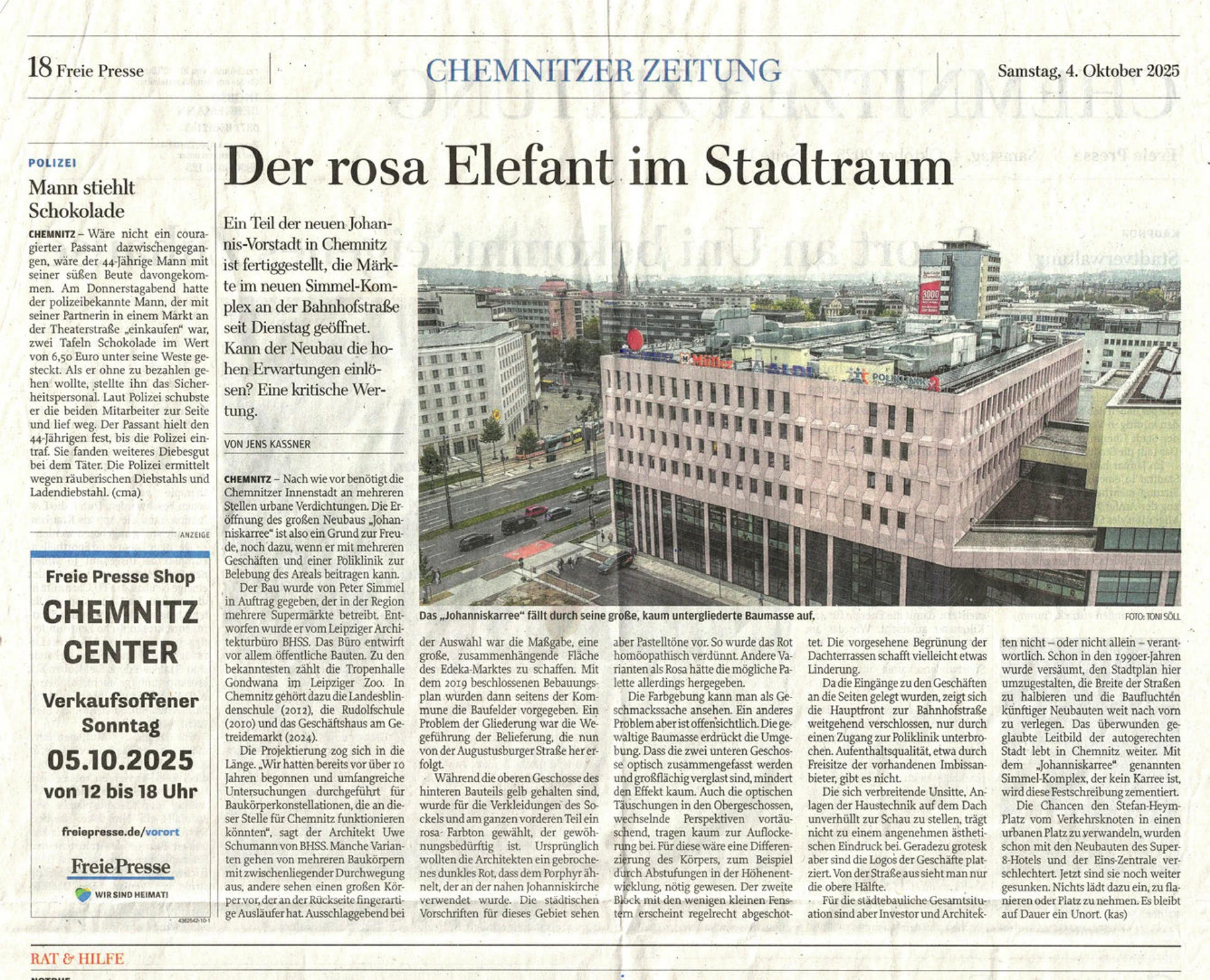
This architectural review assesses the newly opened Simmel complex in the Johanniskarree. It acknowledges the potential activity generated by shops and medical services while critically examining the building’s bulk, façade, entrances and the quality of the surrounding public space.
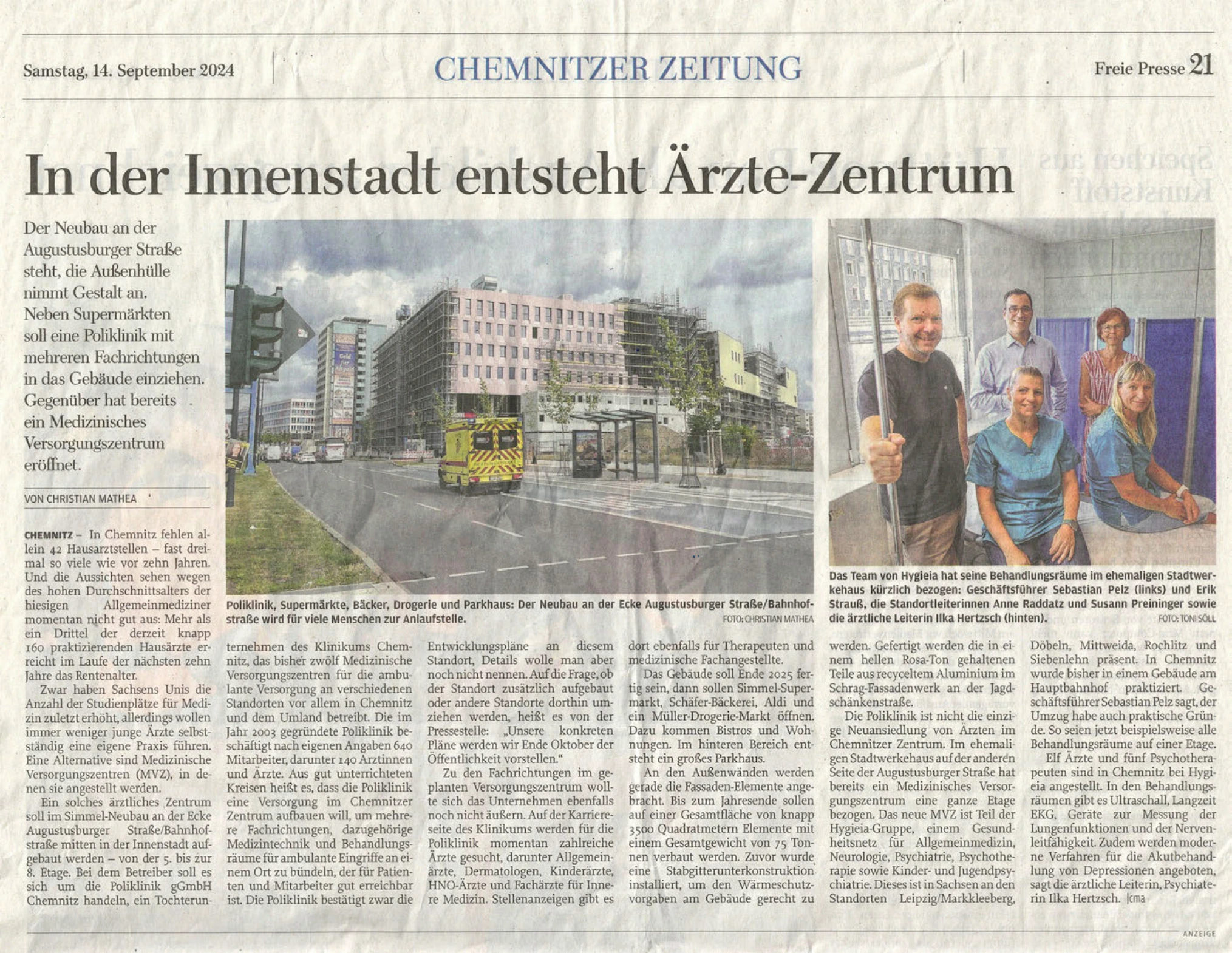
This report introduces the planned medical facilities in the new Simmel complex on Augustusburger Straße. Alongside a polyclinic, it discusses retail space, other uses within the building and the medical centre already operating across the street.
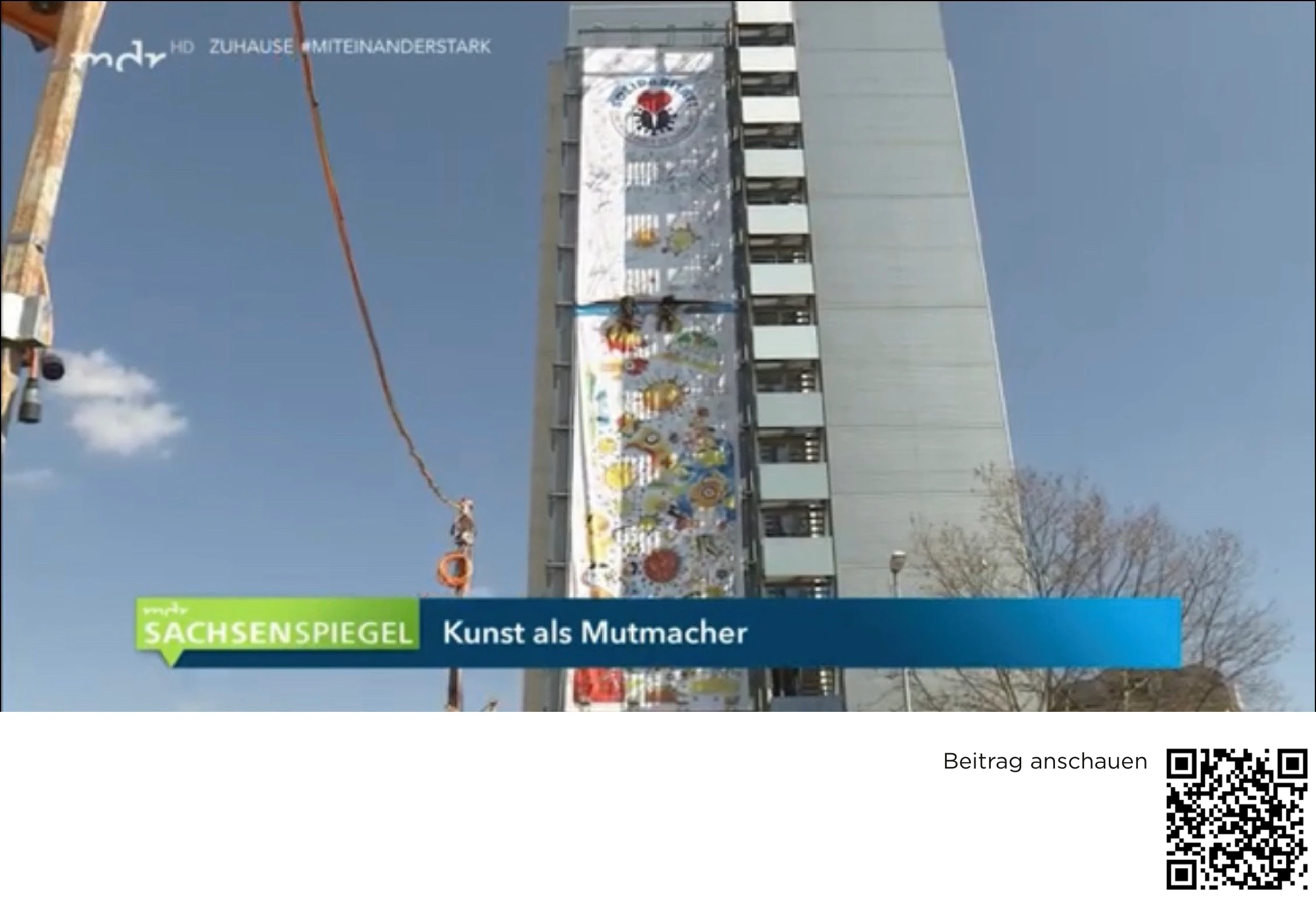
This MDR archive still shows the solidarity art poster on the Cityhochhaus during the coronavirus period. Its on-screen caption presents the project as art offering encouragement. The complete television report cannot be summarised from this still alone.
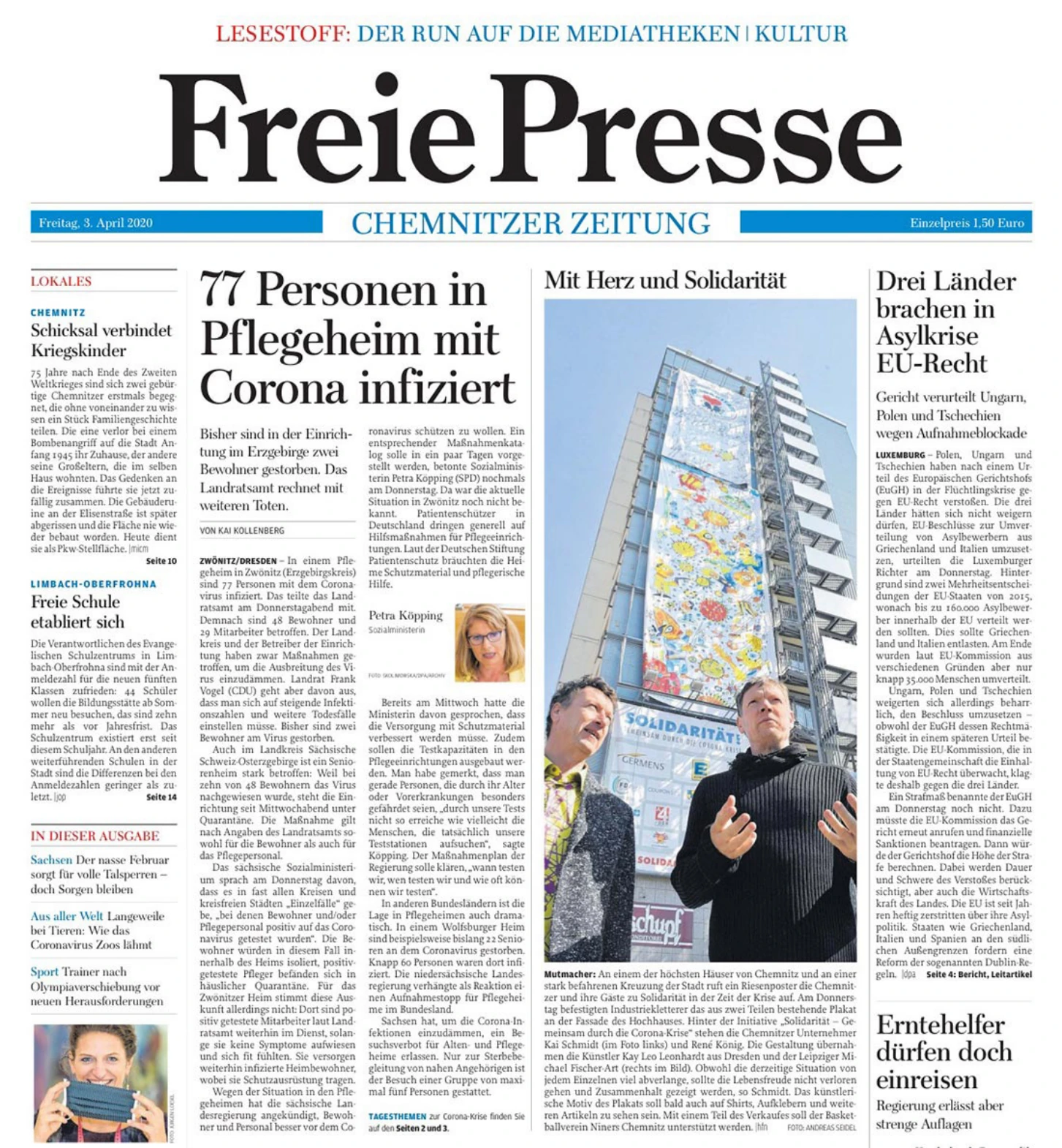
The front page presents the giant poster as a symbol of solidarity during the coronavirus crisis. Its caption identifies the organisers and artists and explains how the artwork was intended to offer encouragement and, through related products, support NINERS Chemnitz.
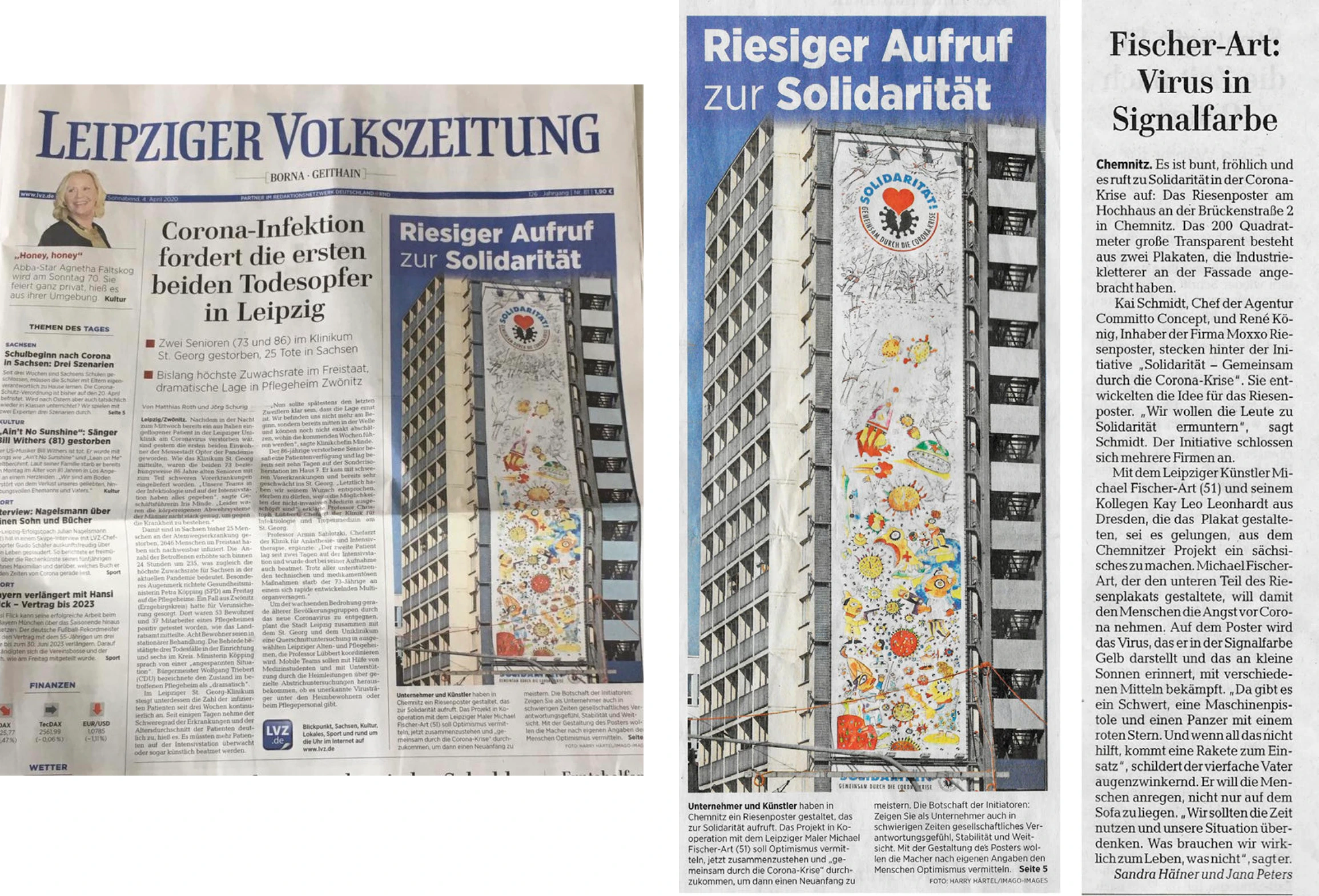
These collected clippings explain the solidarity project organised by Chemnitz businesses and artists. They describe Michael Fischer-Art and Kay Leonhardt’s colourful design as an artistic response to the crisis and a public appeal for optimism and mutual support.

The article places the giant solidarity poster alongside other encouraging messages around Chemnitz. It explains how the initiative developed, its artistic design and the aim of strengthening hope and community through visible messages in public space.
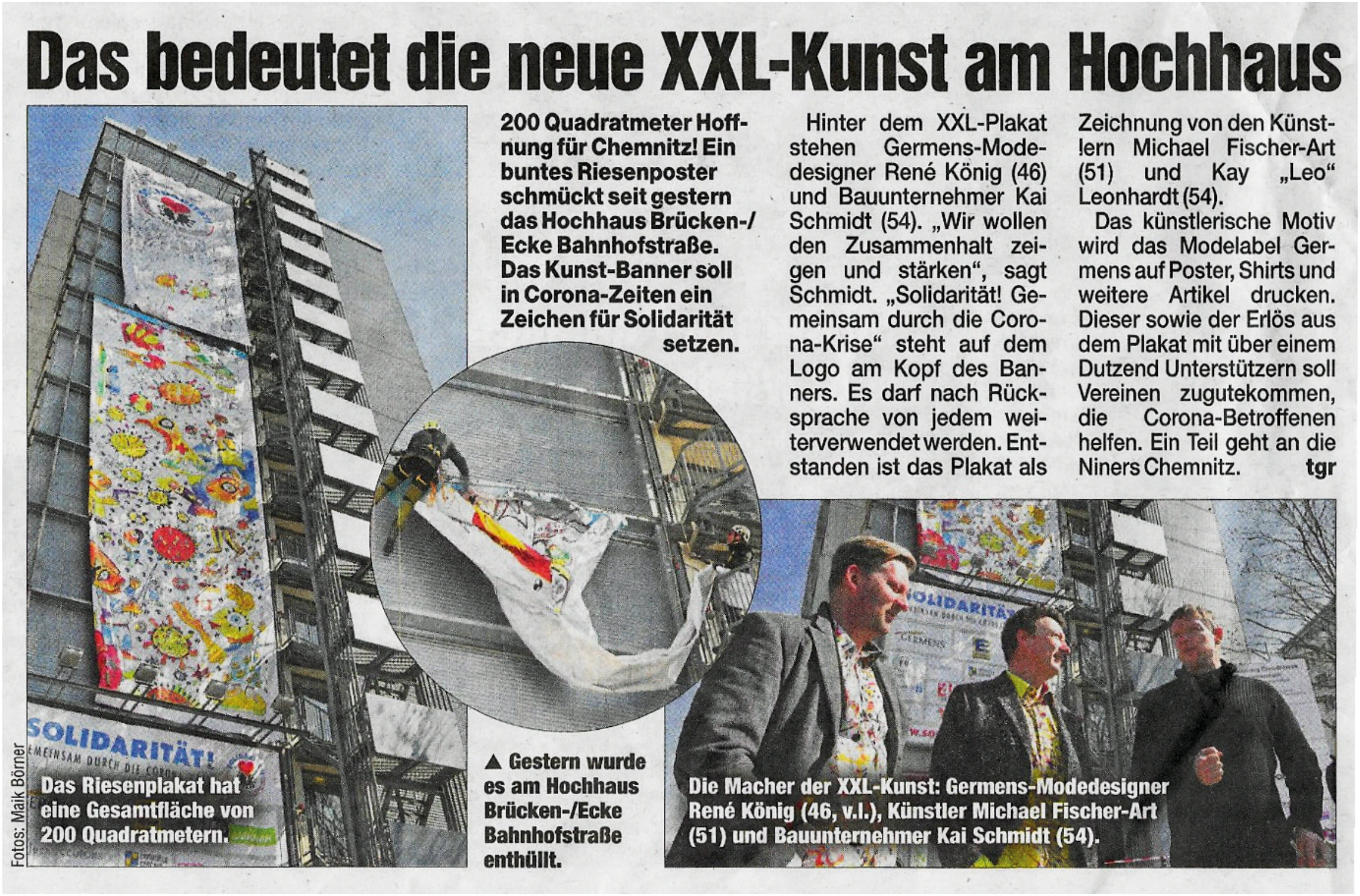
This report explains the message of the new large-scale artwork on the Cityhochhaus: solidarity during the coronavirus crisis. It introduces those involved and describes plans to use the design on other products to support assistance initiatives and NINERS Chemnitz.
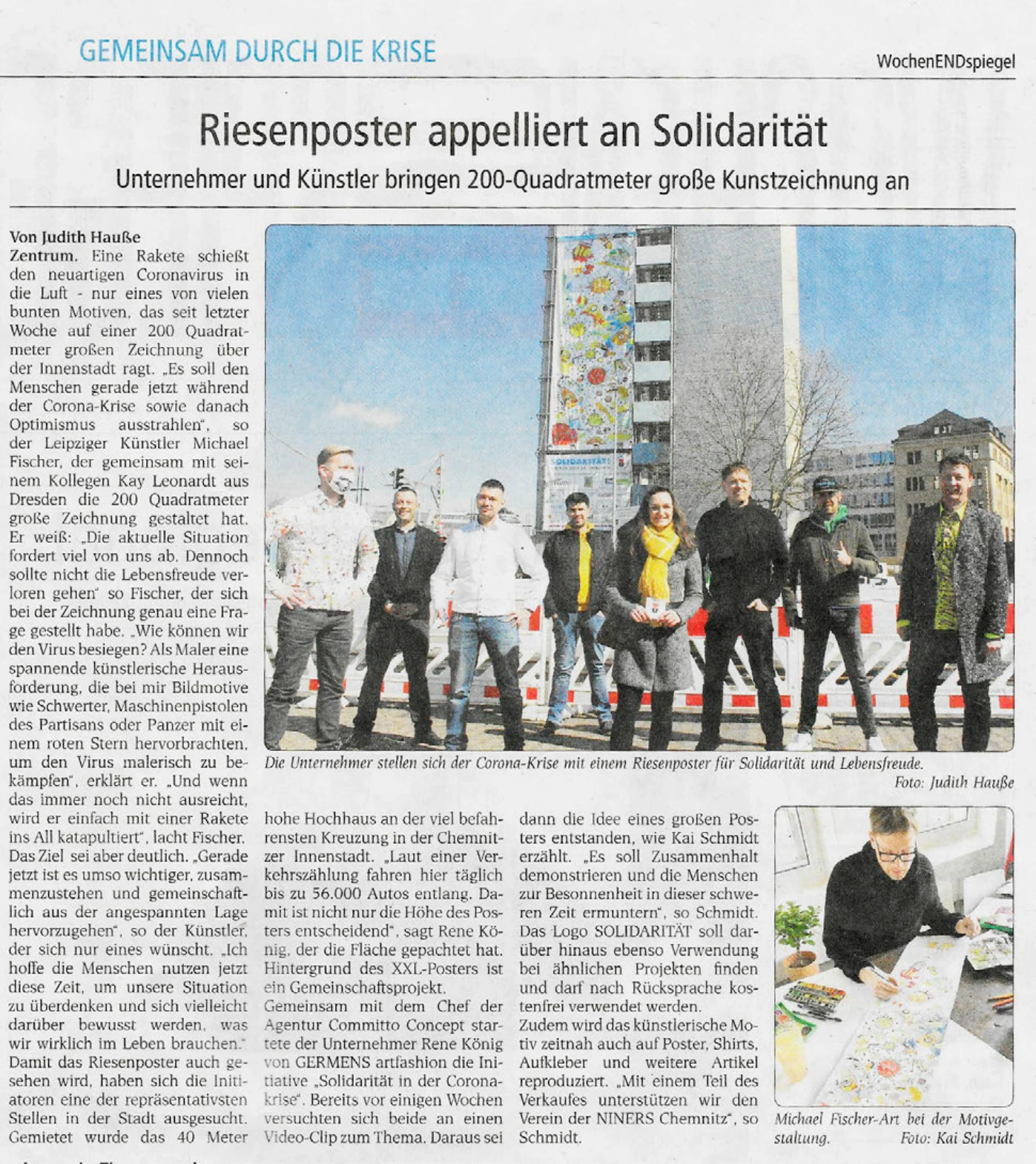
WochenENDspiegel describes the collaboration between businesses and artists behind the solidarity poster. It focuses on the development of the artwork, the choice of a highly visible location and the aim of encouraging optimism and collective action despite the crisis.
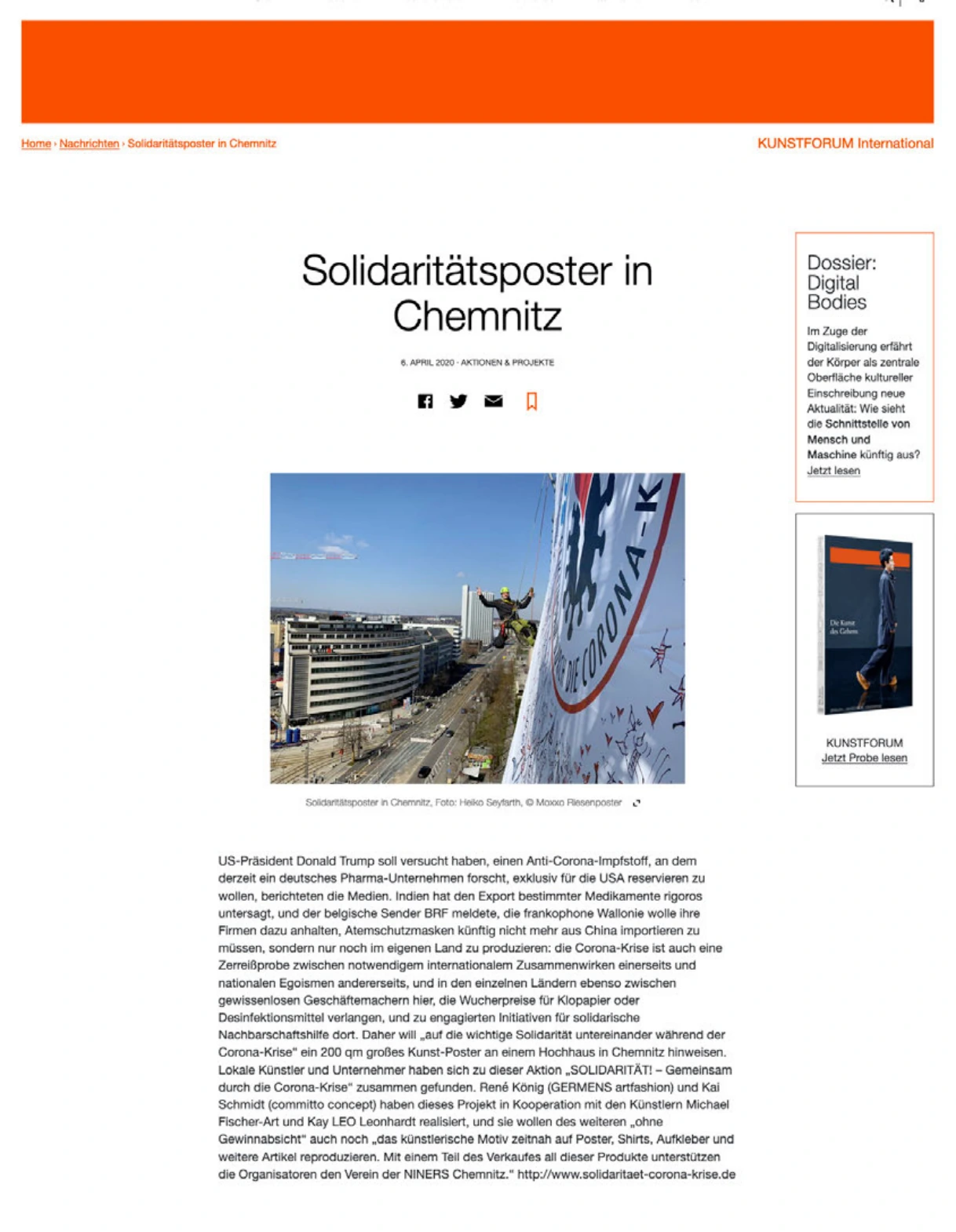
KUNSTFORUM places the Chemnitz solidarity poster within the social tensions of the coronavirus period. It presents the joint project as an artistic appeal against selfishness and for mutual support, also noting plans to reuse the artwork on related products.

The article explains the plans at the time to renew the busy junction of Bahnhofstraße, Brückenstraße and Augustusburger Straße. It discusses construction phases, traffic arrangements and potential disruption in the immediate surroundings of the Cityhochhaus.
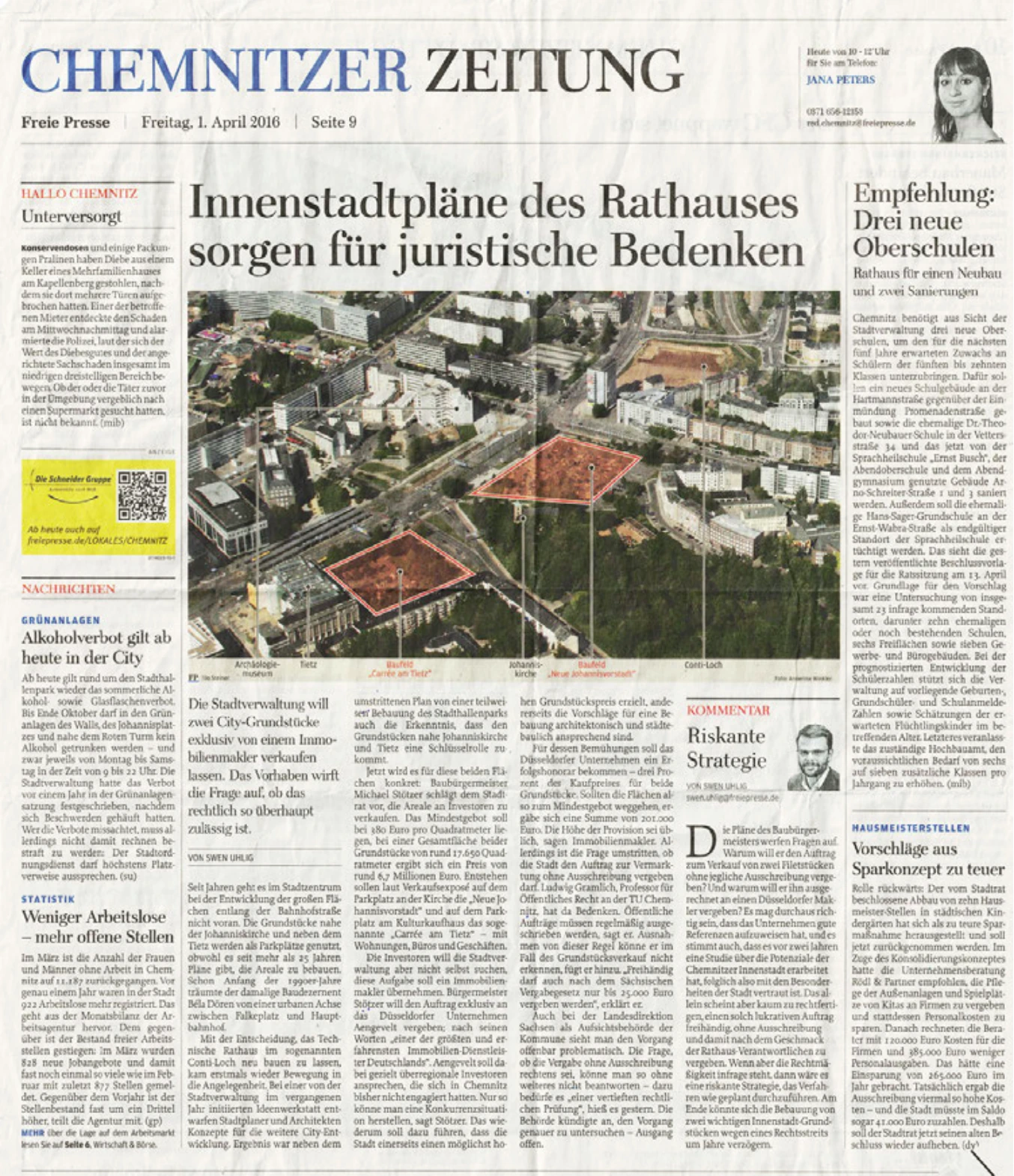
Freie Presse reports on concerns about a proposal to market two city-centre development sites through an exclusively appointed property agent. The article explains the urban-planning aims and the unresolved questions surrounding the proposed appointment procedure.
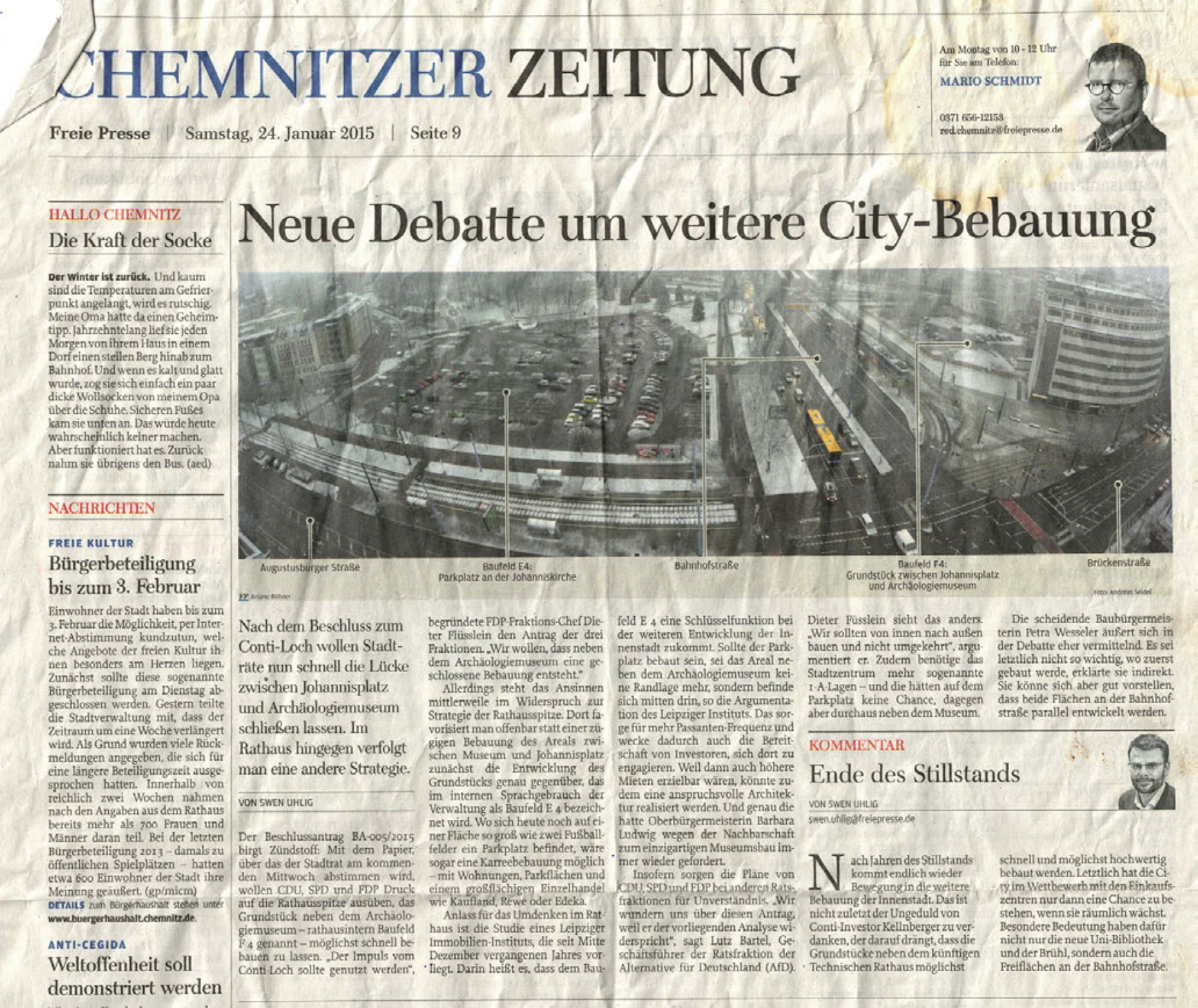
The report describes the political debate over further development in central Chemnitz. Differing views on the order of construction around Johannisplatz, the archaeology museum and Johanniskirche illustrate proposals for reshaping the Cityhochhaus neighbourhood.
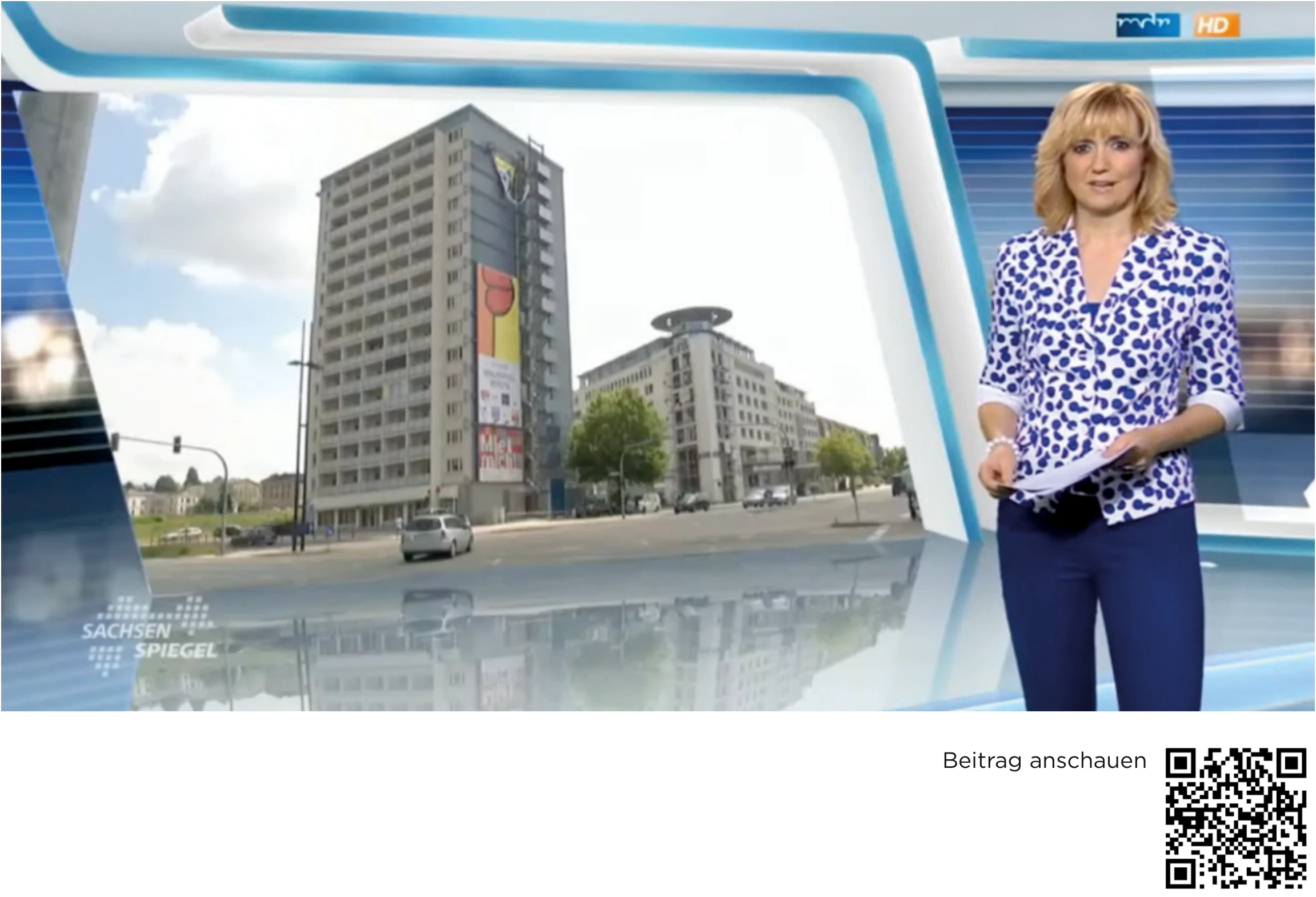
This archived television still shows the Cityhochhaus displaying Thierry Noir’s distinctive head motif. It documents MDR Sachsenspiegel’s coverage of the art project in June 2014; the clipping does not include a full transcript of the broadcast.
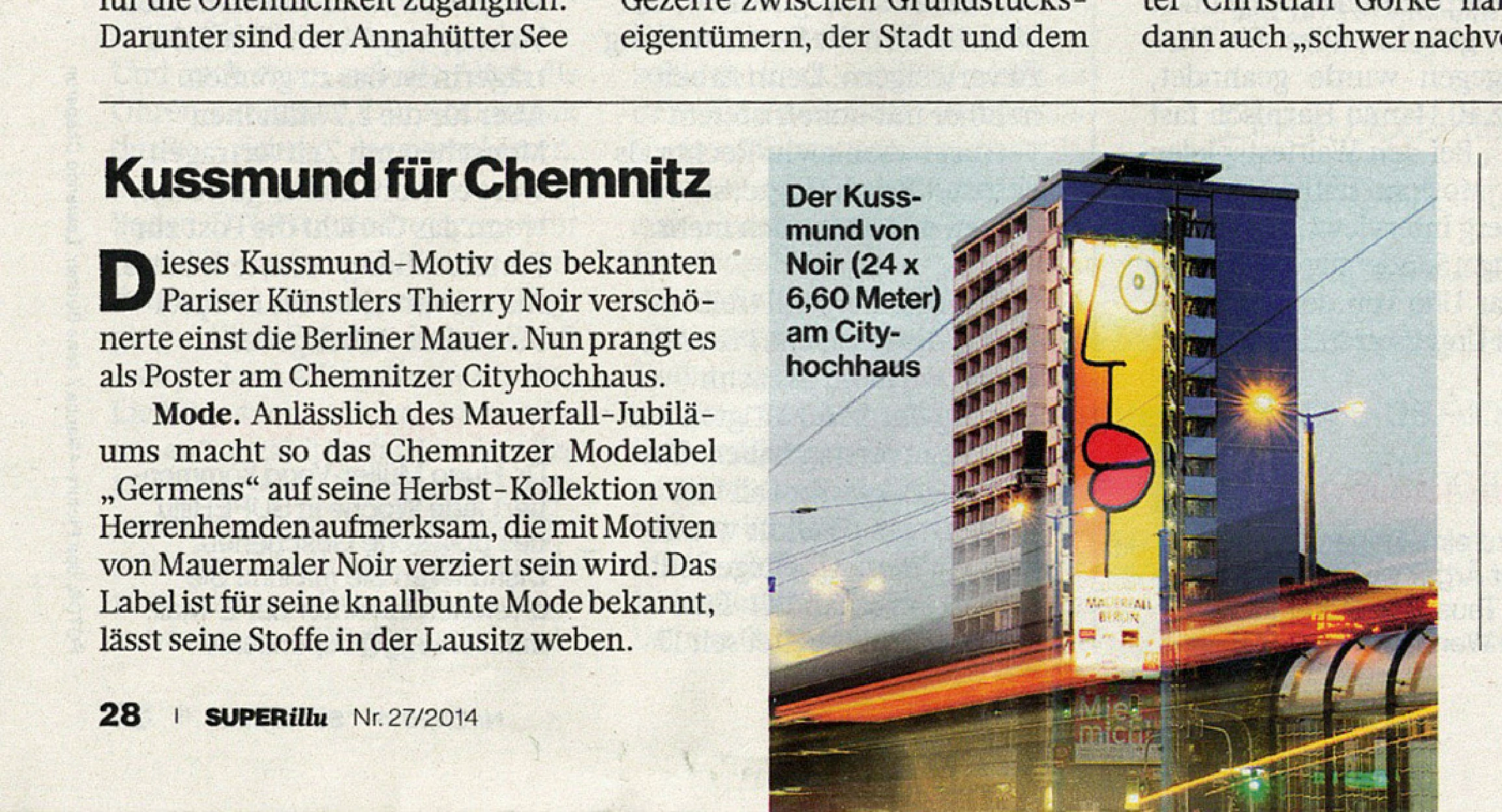
SuperIllu links Thierry Noir’s Cityhochhaus artwork to the anniversary of the fall of the Berlin Wall. It also explains its connection to a planned GERMENS shirt collection featuring work by the artist known for his Berlin Wall paintings.
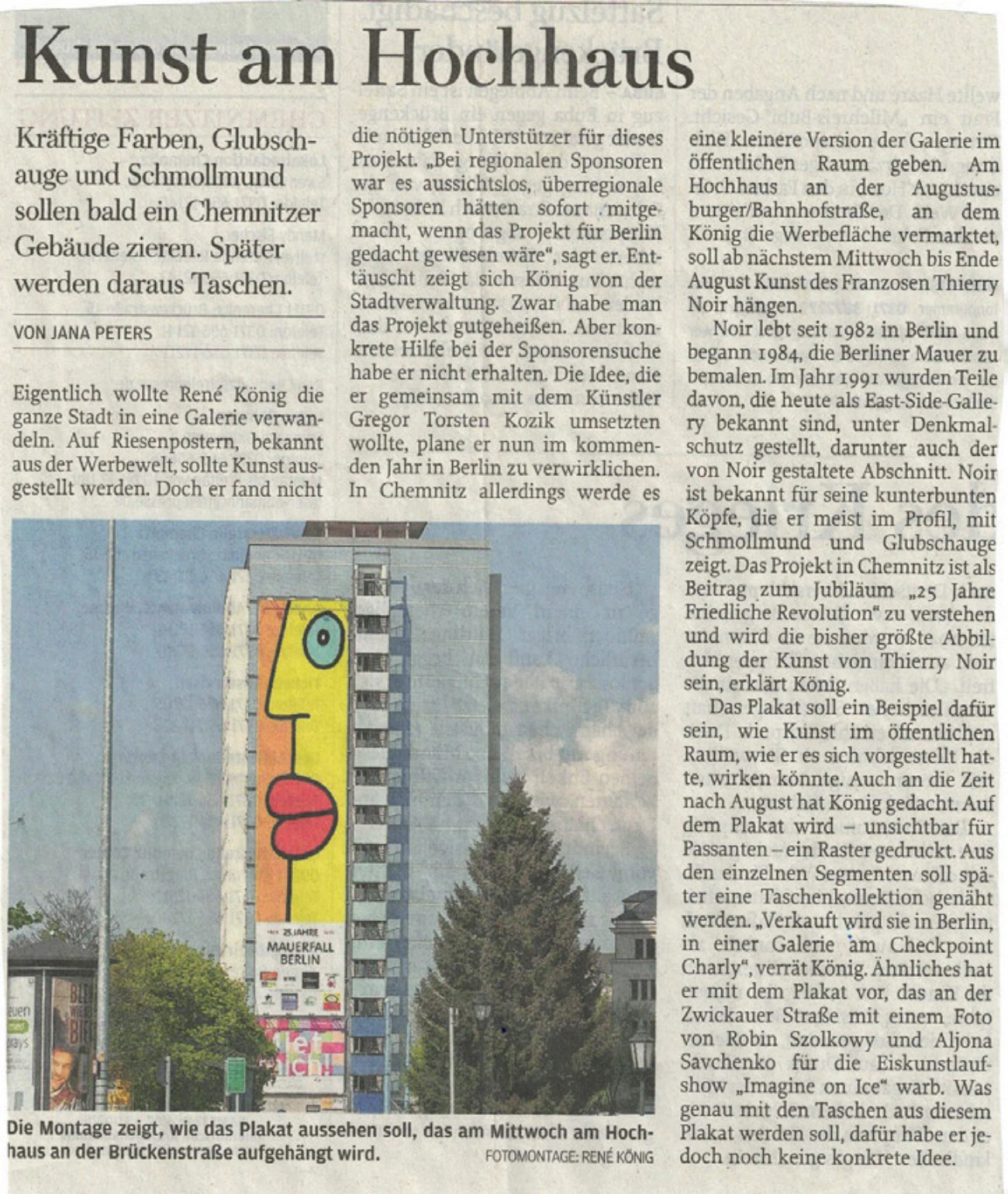
The article explores René König’s idea of using large advertising spaces as an outdoor art gallery. It discusses the search for sponsors, the planned Thierry Noir poster marking the Berlin Wall anniversary and the initial proposal to turn the banner into bags afterwards.
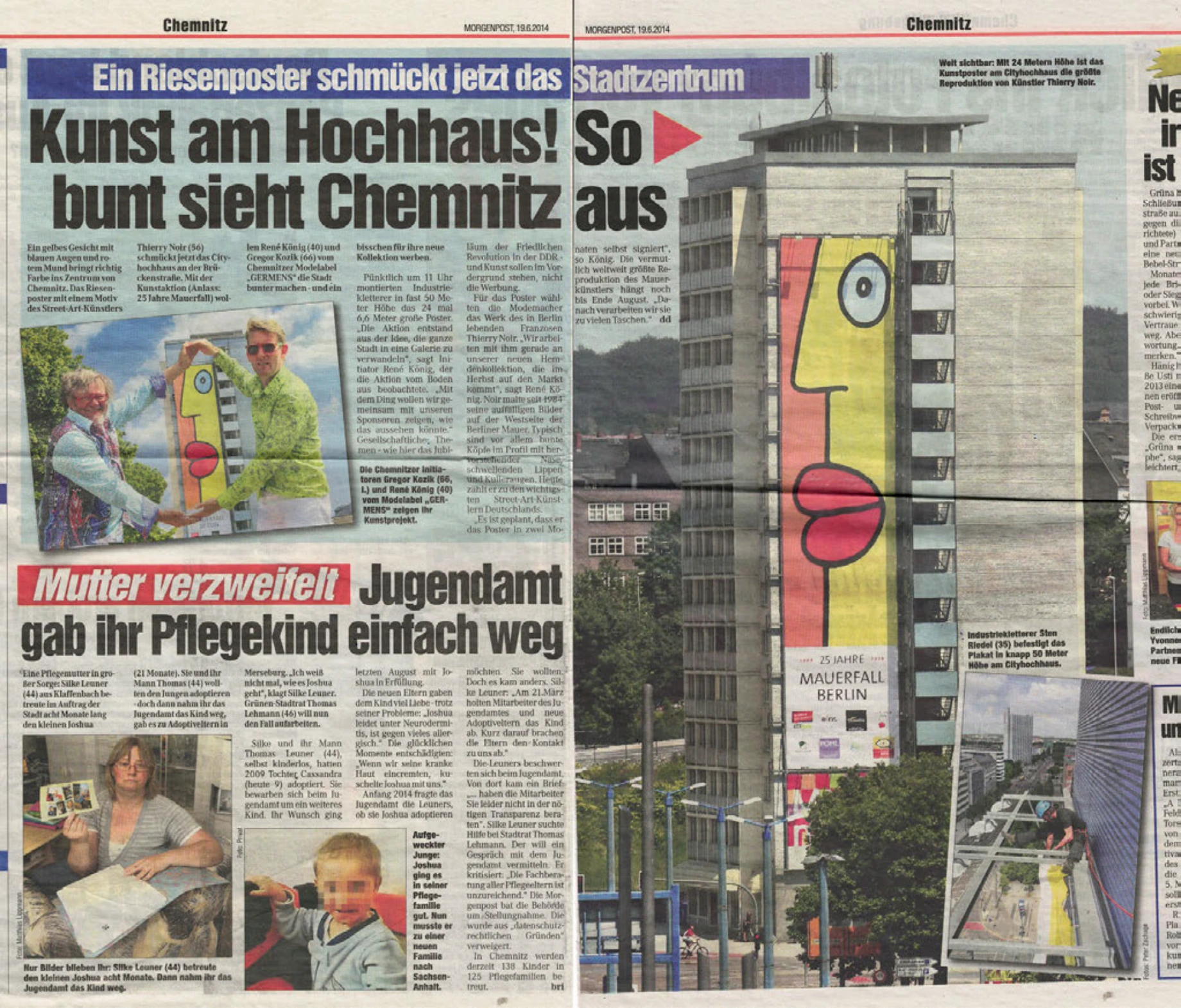
Morgenpost covers the installation of Thierry Noir’s colourful art poster in central Chemnitz. It introduces organisers René König and Gregor-Torsten Kozik, the connection with GERMENS and the aim of bringing art and remembrance of the Berlin Wall into public space.
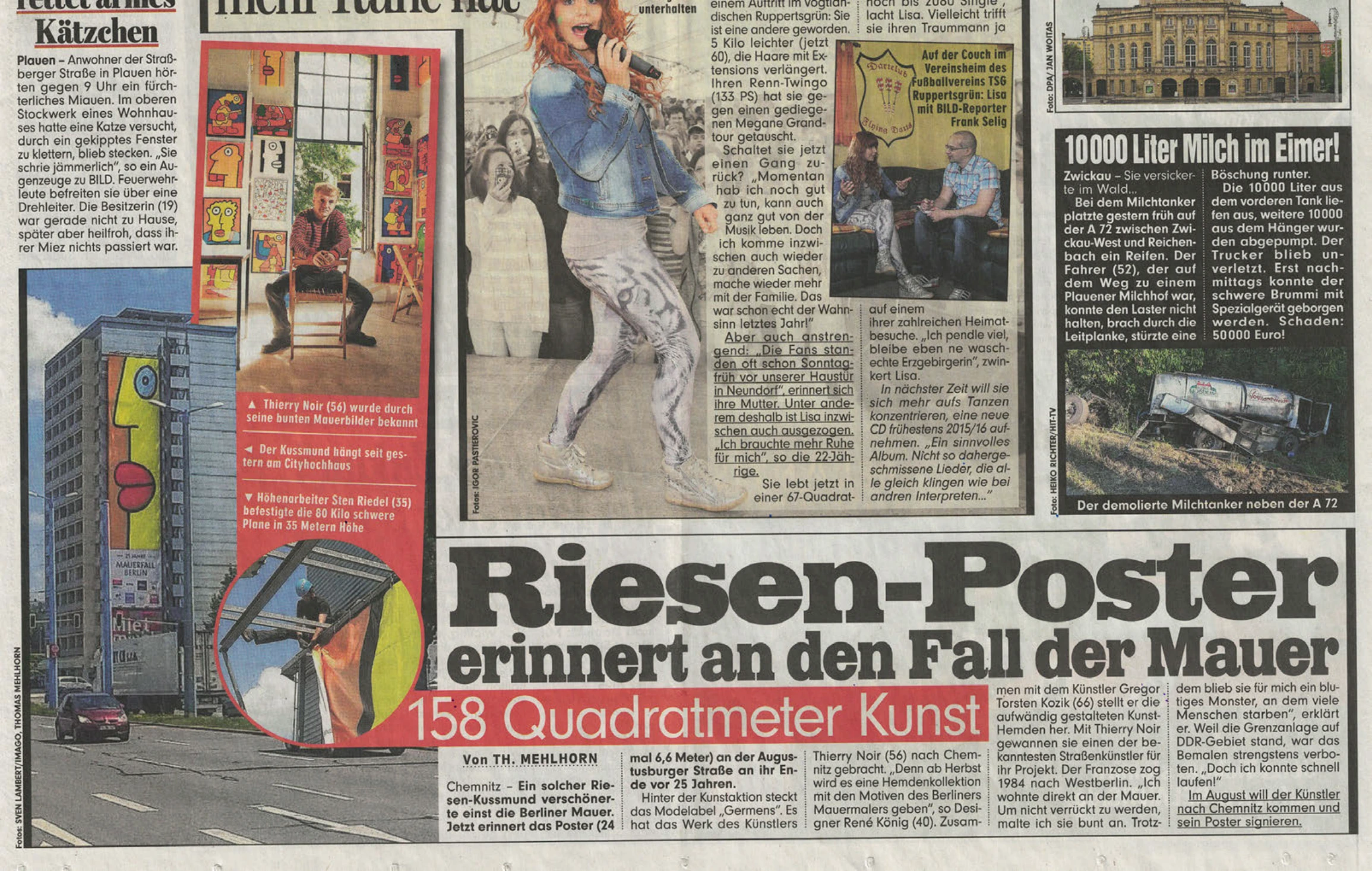
The report presents the giant poster as a commemoration of the fall of the Berlin Wall. Alongside the installation, it introduces Thierry Noir, his artistic connection with the Wall and his collaboration with the founders of GERMENS.
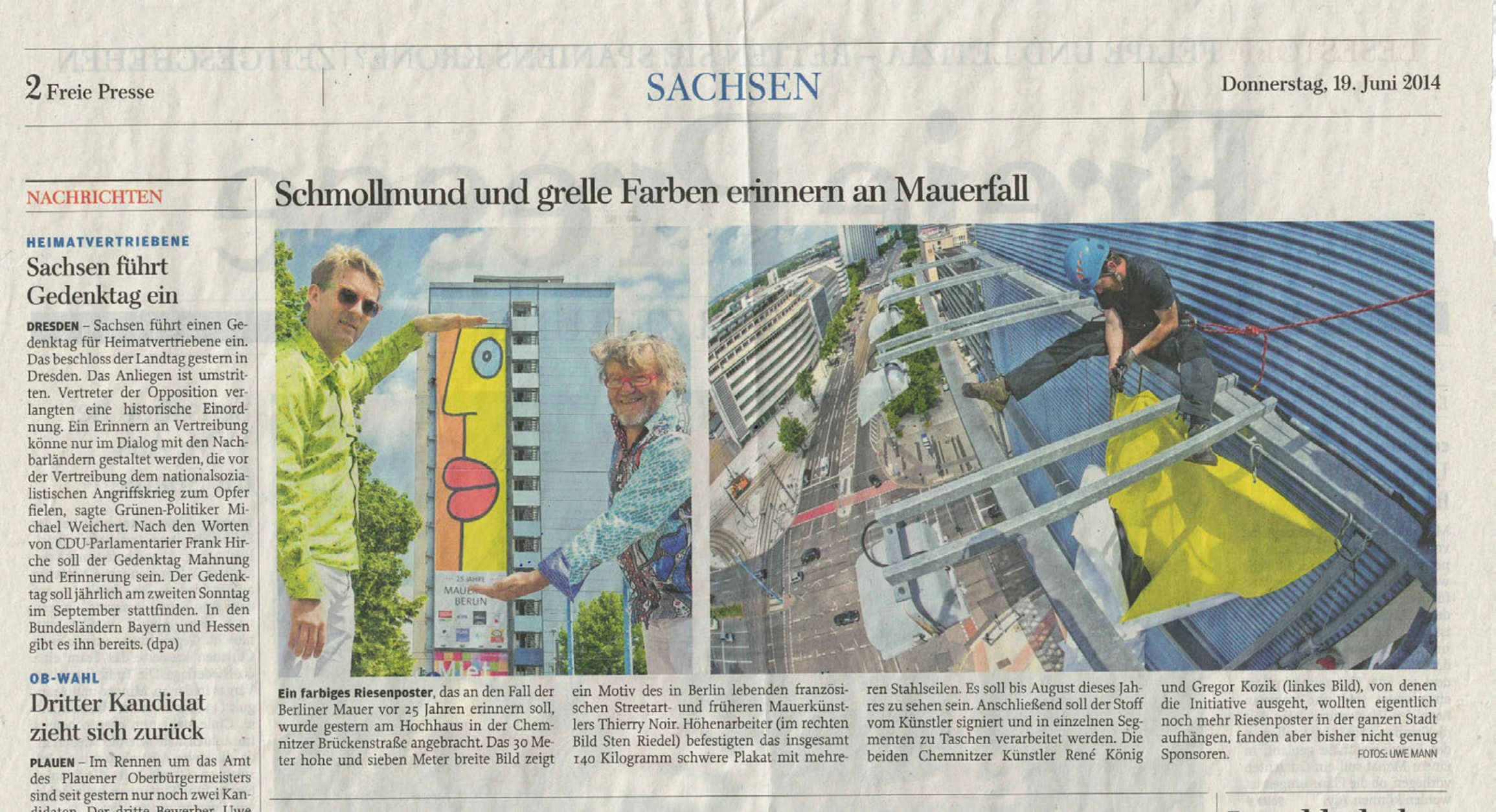
This photo report shows the organisers and the installation of Thierry Noir’s poster high above the street. It places the project in the context of the Wall’s 25th anniversary and mentions the planned signing and the banner’s initially intended reuse.
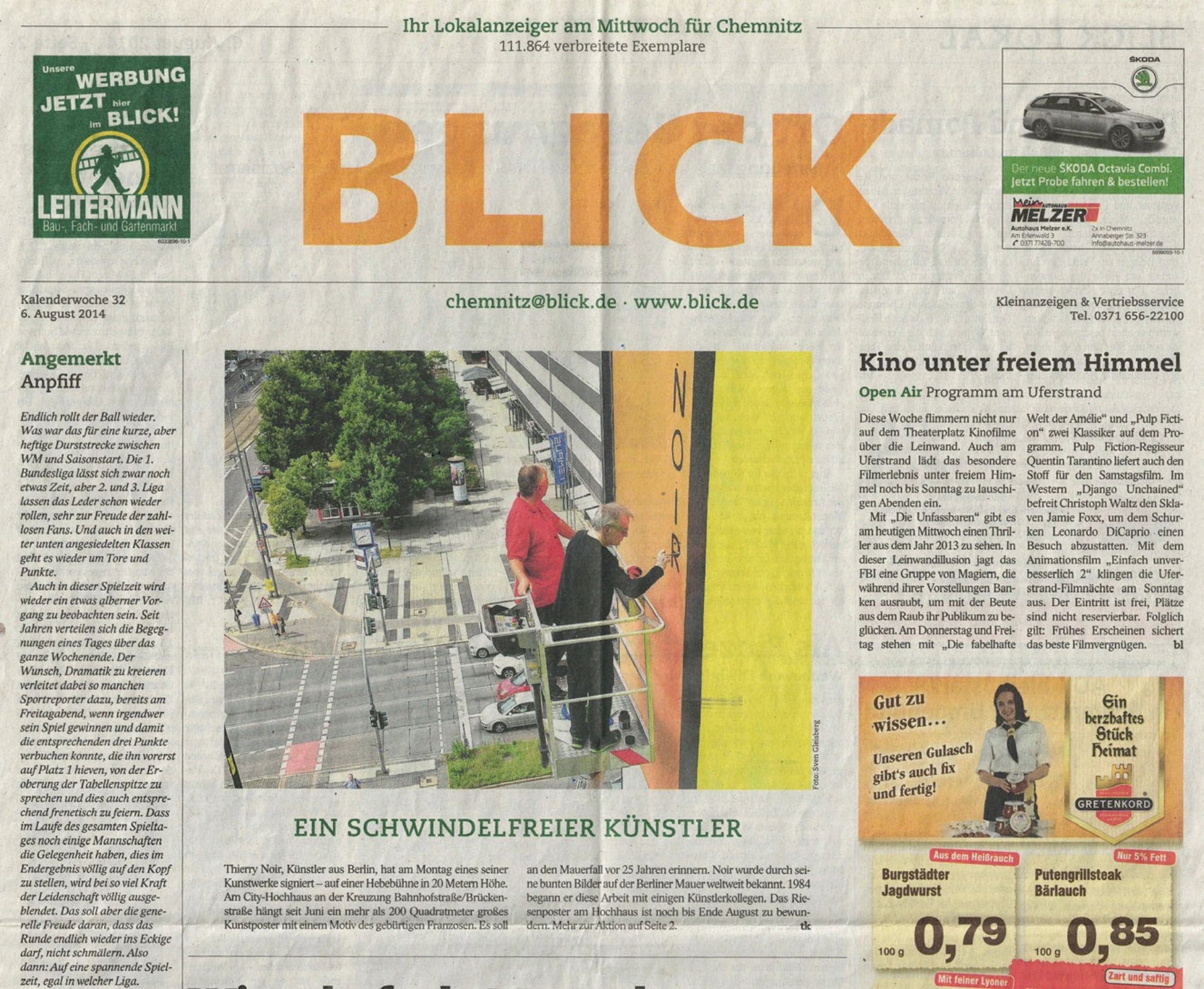
BLICK’s cover photograph shows Thierry Noir signing his art poster from an aerial platform. The accompanying text recalls his work on the Berlin Wall and explains the occasion for the large-scale presentation in Chemnitz.
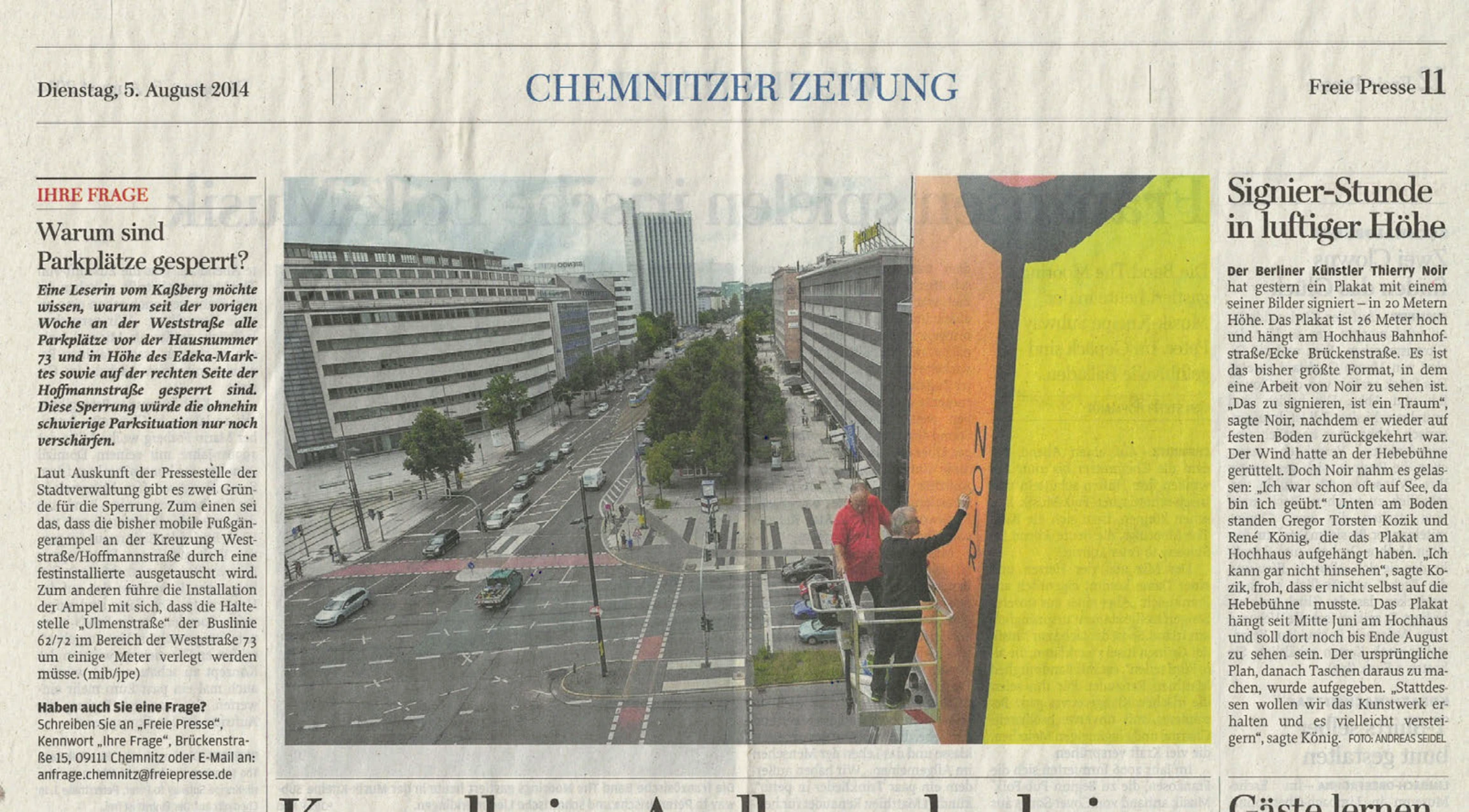
Freie Presse reports on Thierry Noir signing the Cityhochhaus banner and his reaction to seeing his work at such an unusual scale. It also records that the earlier plan to make bags had been dropped in favour of preserving the artwork.
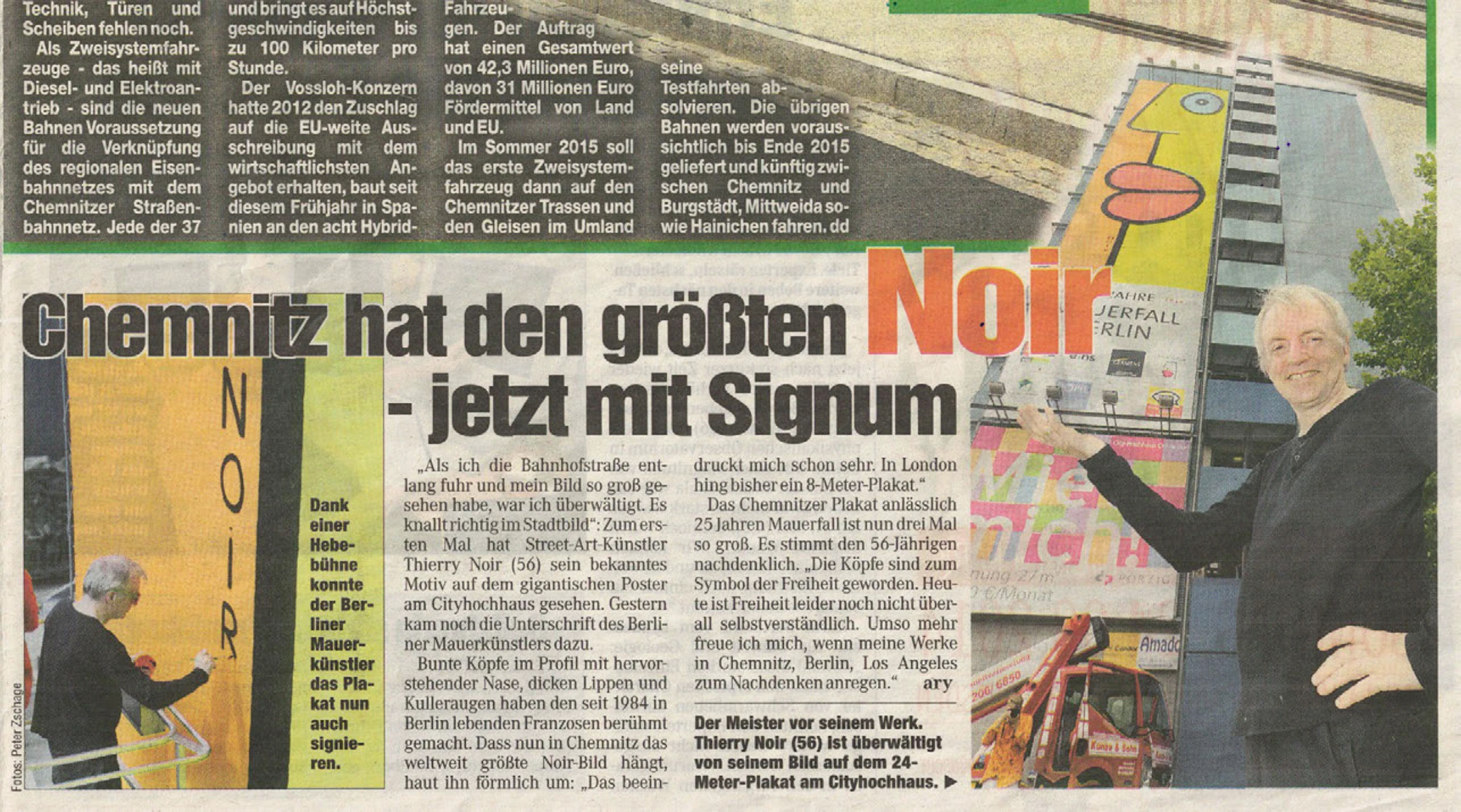
This article describes Thierry Noir’s visit to his giant Chemnitz poster and his personal signing of it. It highlights the impact of the large-scale artwork and links the artist’s characteristic heads with the idea of freedom.
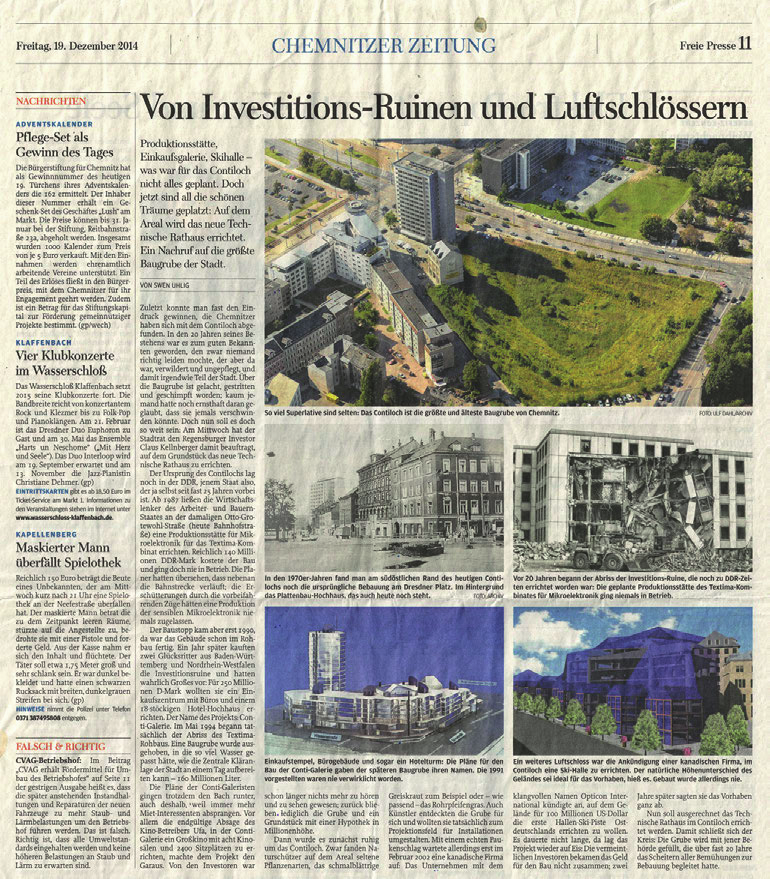
This historical review traces the changing plans for the site known as the Conti-Loch near the Cityhochhaus. It covers unfinished construction and subsequent development proposals before the land was earmarked for the city’s technical administration building.
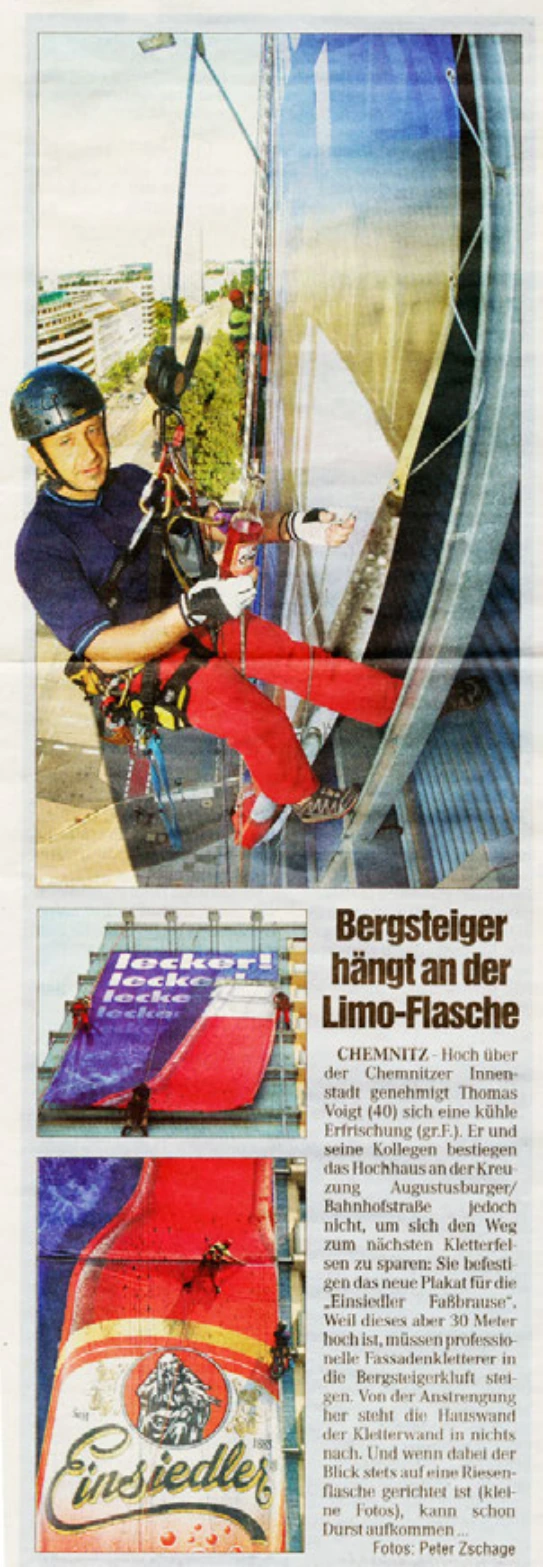
This photo report follows rope-access installers fitting a new Einsiedler Fassbrause banner. It shows the large display being secured high above the city centre and highlights the professional climbing techniques involved.
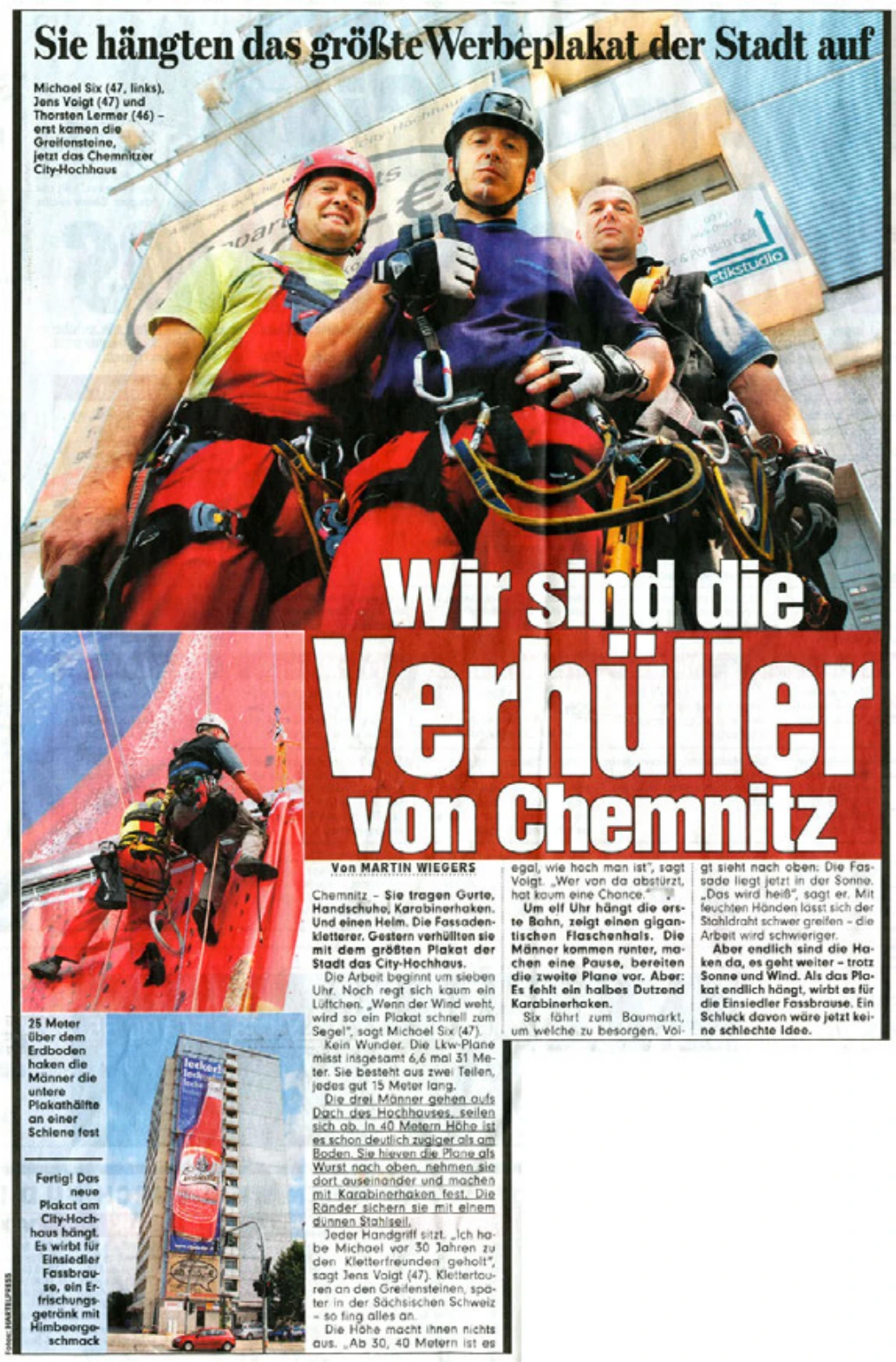
The feature goes behind the scenes of a poster change at the Cityhochhaus. It follows the installers as they abseil and secure the two-part soft-drink banner, describing the challenges posed by height, wind and materials.
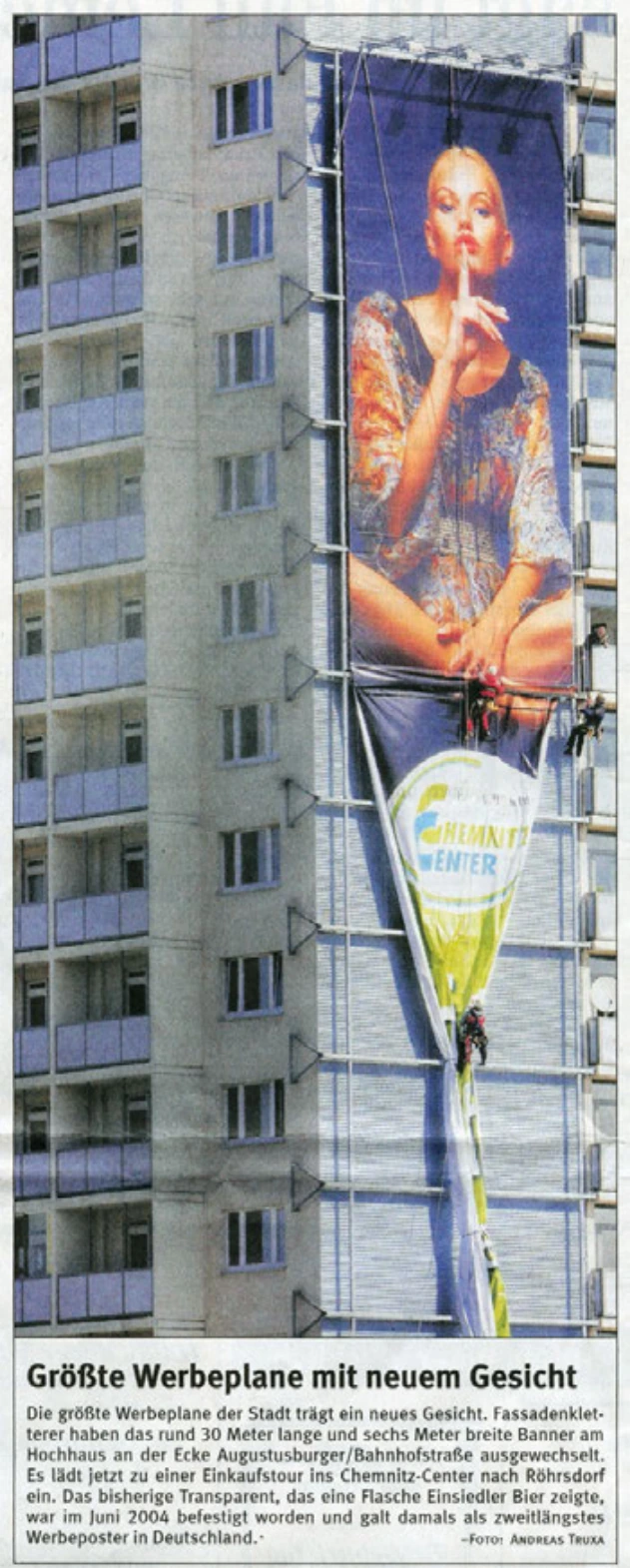
This short photo report documents a change of artwork on the high-rise façade. A campaign for Chemnitz-Center replaces the previous beer advertisement, with the focus on the new appearance and its installation by rope-access specialists.
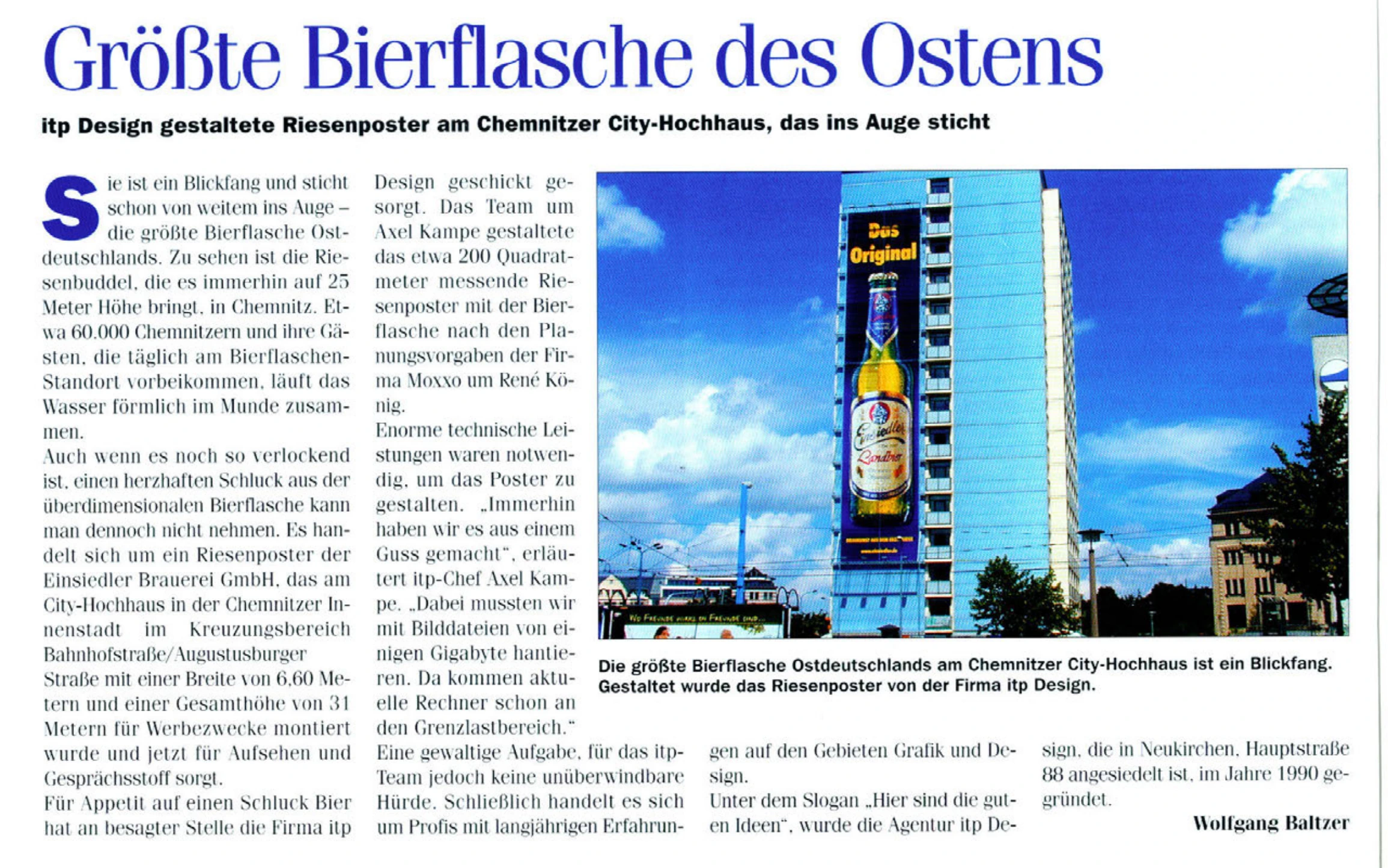
This article focuses on the Einsiedler brewery’s giant beer-bottle poster. It describes the design by itp Design, planning with René König’s company Moxxo and the technical challenges of producing the large-format artwork.
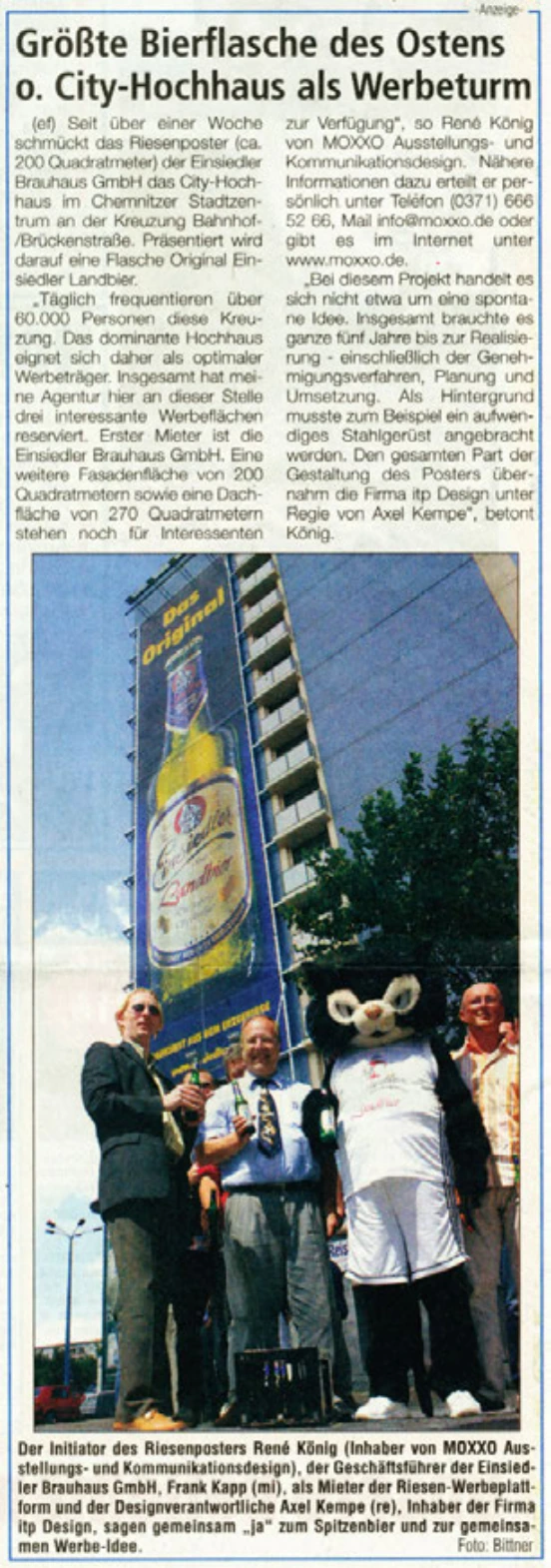
This item, marked as an advertisement, presents the Cityhochhaus as an advertising location. Using the Einsiedler poster as an example, it outlines years of preparation, approval and installation, alongside the collaboration between René König, the brewery and itp Design.
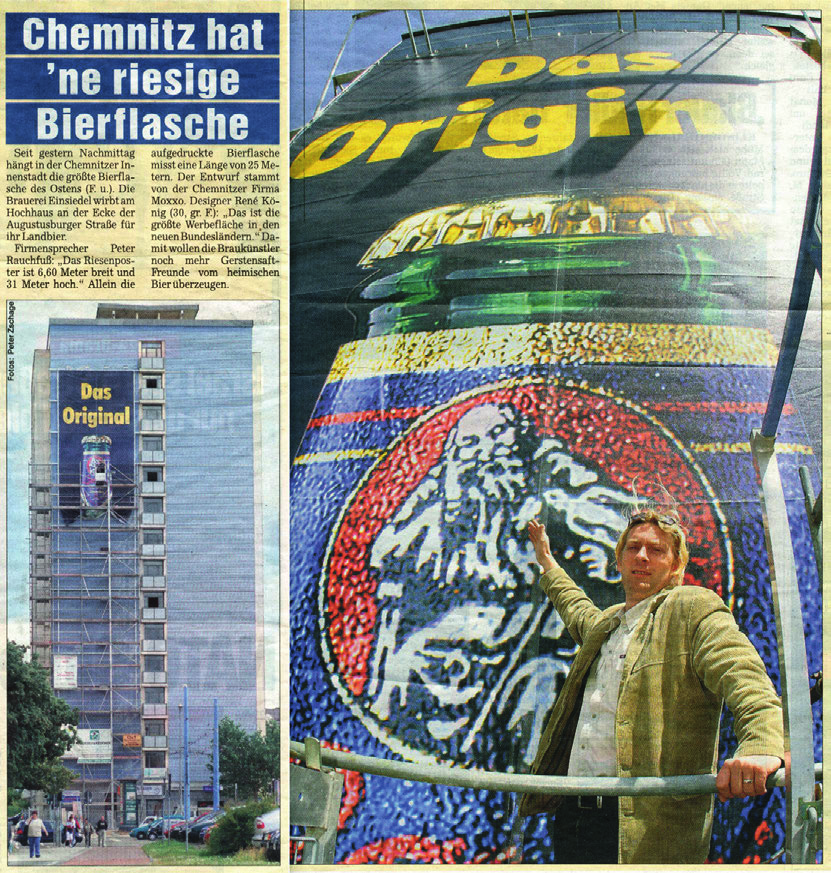
Morgenpost reports on the oversized Einsiedler beer bottle displayed on the Cityhochhaus. The clipping shows René König in front of the artwork and describes the poster’s exceptional dimensions and the impact of the new city-centre advertising space.
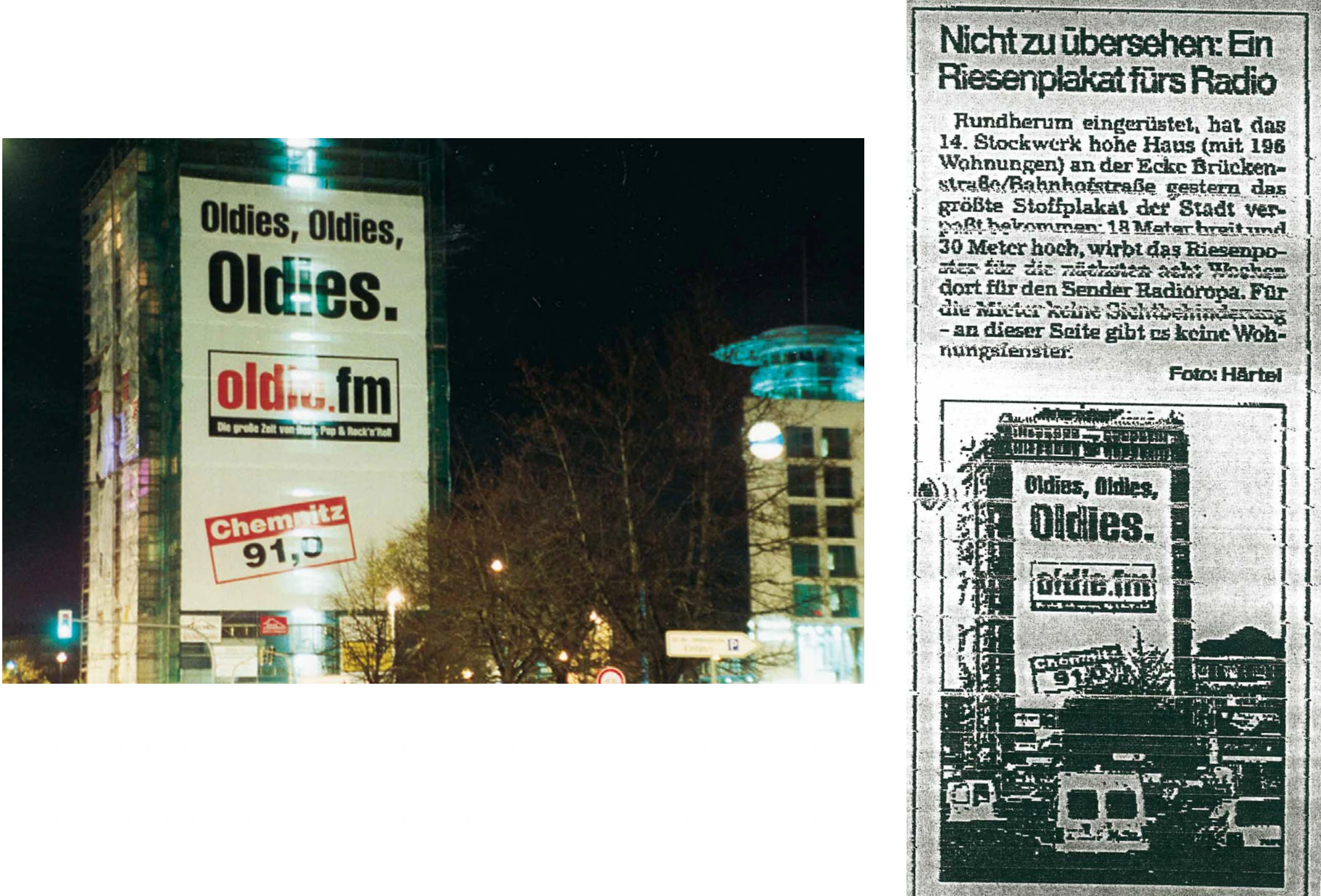
The report introduces a giant radio advertising banner on the scaffolded Cityhochhaus. It describes its exceptional scale and explains why the windowless side of the building was suitable for this prominent display.
Publication names and dates follow the labels in the supplied collection. Historical articles describe the situation at the time of publication. The historical TV stills are complemented by two playable YouTube videos in the “TV reports on video” section.
Complete press collection (PDF)CPW · MEGA Ad Tower
Discover the MEGA Ad Tower and discuss your outdoor advertising campaign with CPW.