CPW · City insights and advertising perspectives
Understand Chemnitz.
Discover the city.
Facts, business, culture and day trips: explore Chemnitz as a place to live, a travel destination and a location for outdoor advertising.
For marketing professionals and agencies, this page offers insights into audiences and urban development. For visitors and residents, 20 themed guides lead directly to culture, nature, leisure and places to eat.

250.497Main-home residents · 30 June 2026
8.447TU students · 2025
2025European Capital of Culture
20 guidesCity, culture, nature and food
Location insights for informed decisions
Chemnitz in numbers. With the right context.
A city is more than its population. Commuting, universities, shopping, events and leisure bring different audiences together. Outdoor advertising planning depends on which of these journeys pass the individual location.
Updated key figures
- 250,497 residents with their main home in Chemnitz on 30 June 2026.
- 253,224 registered residents including second homes on the same date.
- 8,447 students at TU Chemnitz in 2025.
- 2,819 international students at TU Chemnitz in 2025.
Sources: City of Chemnitz population register and TU Chemnitz facts and figures. The population register and official population estimates use different methods and must not be treated as one consistent time series.
Chemnitz at a glance
Chemnitz is Saxony’s third-largest city. The municipal population register recorded 251,699 people with their main home in the city on 31 December 2024. The IHK profile, based on official population estimates, gives 245,038 residents on 30 November 2025 and an area of 221 km². Chemnitz is therefore a city of roughly a quarter of a million people, with an official population density of just over 1,100 residents per km².
Chemnitz within Saxony and Germany
The city reported 250,497 main-home residents on 30 June 2026, 356 fewer than a year earlier. At the same time, net migration between July 2025 and June 2026 was positive by 1,661 people. Inward migration and overall population change therefore require separate consideration. Source: City of Chemnitz, 3 July 2026.
Located in the heart of Saxony, Chemnitz is the principal regional centre for south-western Saxony. City and tourism marketing describe a catchment area of around 1.42 million people. The A4 and A72 motorways, regional rail network and Chemnitz Model connect the city with Central Saxony, the Ore Mountains, the Zwickau area and wider Central Germany. Visibility in Chemnitz therefore also connects with a regional market.
One of the city’s landmarks: the colourful Bunte Esse chimney
Further indicators and earlier reference years
The following collection contains figures from different survey years used in the existing location description. Where stated, the respective reference dates apply. Catchment areas, passenger journeys and population totals measure different things; they are not audience figures for individual advertising locations.
- Population of Chemnitz: approximately 250,000
- Main-home residents, end of 2024: 251,699
- Main-home residents, end of 2021: 243,646
- Main-home residents, 2023: 251,485
- 250,000 threshold exceeded: 27 June 2023
- Population on 27 June 2023: 250,160
- Central German Metropolitan Region: approximately 2.41 million residents
- Regional catchment area of Chemnitz: approximately 1.42 million people
- Daily inbound commuters: approximately 46,000
- A4 at Chemnitz motorway junction: approximately 83,900 vehicles per day
- A72 at Chemnitz motorway junction: approximately 76,300 vehicles per day
- Chemnitz Südring: approximately 30,000–35,000 vehicles per day
- CVAG passenger journeys: approximately 33 million per year
- CVAG passenger journeys per day: approximately 90,000
- City-Bahn Chemnitz: approximately 3.5 million passenger journeys per year
- Capital of Culture 2025: more than 2 million visits
- Capital of Culture 2025: approximately 2,000 events
- Overnight stays in Chemnitz, January–September 2025: approximately 449,000
- Growth in overnight stays, January–September 2025: +23.8%
- Purchasing power per resident: approximately €27,800
- Purchasing power index: approximately 93
- Chemnitz GDP, 2023: €10.804 billion
- GDP per resident, 2023: €43,283
- GDP per economically active person, 2023: €73,463
- IHK Chemnitz: more than 70,000 member businesses in the chamber district
- Mechanical engineering and regional suppliers: more than 500 businesses
- Medium-sized mechanical engineering businesses: more than 100
- Skilled mechanical engineering workers: more than 10,000
- TU Chemnitz students, 2025: 8,447
- International students at TU Chemnitz, 2025: 2,819
- TU Chemnitz professorships: 171
- TU Chemnitz external funding, 2025: €91.6 million
- TU Chemnitz expenditure, 2025: €112.5 million
- Fraunhofer IWU: approximately 670 employees
- Fraunhofer ENAS: approximately 246 employees
- Smart Systems Campus: 6.3 hectares
- Technologie Centrum Chemnitz: 66 businesses
- Hydrogen Innovation Center Chemnitz: €84.4 million investment
- Klinikum Chemnitz: approximately 7,250 employees
- Klinikum Chemnitz: approximately 61,700 inpatient/partial-inpatient cases in 2024
- Klinikum Chemnitz: approximately 75,000 outpatient cases in 2024
Chemnitz brings together residents, commuters, students, public transport users, drivers, tourists and event audiences. It is part of the Central German Metropolitan Region and a focus of regional transport and economic activity. The VMS transport area covers around 1.23 million people, while the metropolitan region has more than 2.4 million residents.
Daily movement is particularly relevant for advertising. Tens of thousands commute into Chemnitz, alongside significant traffic on the A4, A72 and major urban roads. Some sections at the motorway interchange have recorded more than 80,000 vehicles a day; the Südring was designed for 30,000–35,000. These journeys create repeated opportunities for encounters with outdoor advertising.
CVAG carries roughly 33 million passenger journeys annually. Trams, buses, the central interchange, main station and Chemnitz Model connect the city centre with residential areas, university locations, workplaces and the surrounding region.
The European Capital of Culture year in 2025 added wider attention, with more than 2 million visits to nearly 2,000 events. Almost 449,000 overnight stays were reported between January and September 2025 alone. Chemnitz therefore combines a local audience with commuters, visitors, tourists and cultural audiences from the wider region.
Advertising in Chemnitz reaches a regional market of residents, commuters, visitors, public transport users, drivers and cultural audiences. Different journeys create repeated opportunities to encounter your campaign.

Economic strength and business structure
Industry with a future
Mechanical engineering, automotive suppliers, IT and microsystems technology shape Chemnitz. New fields include smart systems, hydrogen and resource-efficient production.
At the end of 2025, the city had 15,836 IHK-affiliated businesses. Industry, smaller and medium-sized businesses and services come together here, creating a relevant setting for B2B communications.
Detailed facts: economic strength and business structure
The IHK profile records 15,836 affiliated businesses in Chemnitz on 31 December 2025 and 117,031 employees subject to social security contributions working in the city on 30 June 2025.
For the wider Chemnitz economic region, the IHK gives more than 62,000 fee-paying member companies. Small and medium-sized enterprises generate around two-thirds of turnover, while industry contributes about a quarter of economic output.
The city’s profile combines mechanical engineering, automotive supply, information technology, microsystems, research and production technology. Smart systems, hydrogen and resource-efficient manufacturing add emerging fields. Former industrial districts are being developed into modern places to work and live for start-ups and technology-based businesses.
According to city documents, two-thirds of Saxony’s automotive suppliers are concentrated in Chemnitz and the surrounding area. Around 250 companies supply, among others, Volkswagen, Porsche and BMW production sites in Saxony. The Chemnitz Industrial Museum traces this history through to today’s industry.
Major employers include the city administration with more than 4,200 staff, TU Chemnitz with around 2,400, Fraunhofer IWU with more than 600 and CVAG with more than 700. Outdoor advertising can therefore intersect with commuting routes across administration, science, research, production and transport as well as consumer activity.

Education, research and skills
Knowledge attracts people
TU Chemnitz connects engineering, business and media. In 2025 it had 8,447 students, including 2,819 international students. Fraunhofer ENAS and IWU, business incubators and technology centres contribute to a setting for research, innovation and skilled professionals.
Fraunhofer ENAS and IWU, business incubators and technology centres support research, innovation and skilled professionals.
Detailed facts: education, research and skills
TU Chemnitz is Saxony’s third-largest higher education institution. Its 8,447 students in 2025 came from 94 countries, according to the university, which also employed around 2,400 people. The international student community contributes to the city’s diversity.
Visible academic fields include Applied Computer Science, Digital Humanities, Biomedical Engineering, Economics and Business, Business Information Systems, Mechanical Engineering, Microtechnology/Mechatronics, Media Communication, and Print and Media Technology. Around 95 degree programmes were presented, sustaining a young population with technical, business and media interests.
Research connects industry, digitalisation and applied development. Fields include analytics, machine learning, data mining, business intelligence, e-commerce, data governance and the digitalisation of innovation processes and business models.
Fraunhofer ENAS develops smart systems based on micro- and nanosensors, electronics and communications interfaces. Fraunhofer IWU works across production technology, machine tools, forming, assembly, machining, microtechnology and production management. Together with the university, the Smart Production and Materials performance centre forms a closely connected innovation network.
Technologie Centrum Chemnitz operates three locations. Its campus-related “Start up” centre provides 1,000 m² of offices and 1,500 m² of serviced laboratory space. SAXEED, the Startup Campus Alliance and Central Germany’s “boOst” initiative connect Chemnitz with a growing deep-tech ecosystem. The Hydrogen Innovation Center adds a location within Germany’s national hydrogen innovation and technology centre initiative.
This gives advertising in Chemnitz a context of skills, innovation and economic change as well as audience opportunities.

Audiences, age structure and purchasing power
One city. Many audiences.
Families, working people, students and older residents shape city life. Work, shopping and leisure bring them together at central destinations. The 2024 retail centrality index of 125.2 indicates that Chemnitz also attracts purchasing power from the surrounding region.
The retail centrality index of 125.2 in 2024 indicates that Chemnitz also attracts purchasing power from the surrounding region.
Detailed facts: audiences, age structure and purchasing power
Based on the published age groups and the reference population of 251,699, children and young people under 18 account for around 16%; people aged 18–35 make up just over one-fifth; and those roughly between 35 and 60 account for almost one-third. More than 85,000 residents are over 60. This provides a broad audience range rather than a single demographic profile.
Outdoor advertising also intersects with people visiting the city: commuters, students, shoppers, visitors to public offices, cultural audiences and business travellers. Repeated everyday journeys create more than one opportunity to encounter a campaign.
For 2024, the IHK reports retail-related purchasing power of €1,714.91 million and a purchasing power index of 91.7. The retail centrality index of 125.2 indicates that spending is attracted from outside the city. City-centre communications therefore address a regional market as well as local residents.

Mobility, commuters and city-centre activity
Movement creates encounters
The A4, A72, railways and Chemnitz Model connect city and region. The city centre, main station and central interchange concentrate daily journeys. The commuter figures documented here show more than 52,000 employees travelling into Chemnitz from other districts.
The commuter figures documented on this page show more than 52,000 employees travelling into Chemnitz from other districts.
Detailed facts: mobility, commuters and city-centre activity
According to the employment agency, Chemnitz has 94,462 resident employees subject to social security contributions. Of these, 28,837 commute out, while 52,163 employees commute in from other districts, producing a positive balance of 23,326. The SrV 2023 mobility survey found that 47% of journeys in Chemnitz were made by car.
The city is connected by the A4 and A72, with central destinations served by routes including the B95/Leipziger Straße. The main station is a key interchange in the Chemnitz Model, connecting the region directly with the city centre. The centre can be reached from the station by tram, bus or on foot.
CVAG operates six tram and 38 bus routes and carries 33.4 million passenger journeys annually. The central interchange is described in the Mitte area profile as handling around 80,000 people transferring or alighting each day. Central advertising sites can therefore intersect with pedestrian and public transport journeys as well as car traffic.
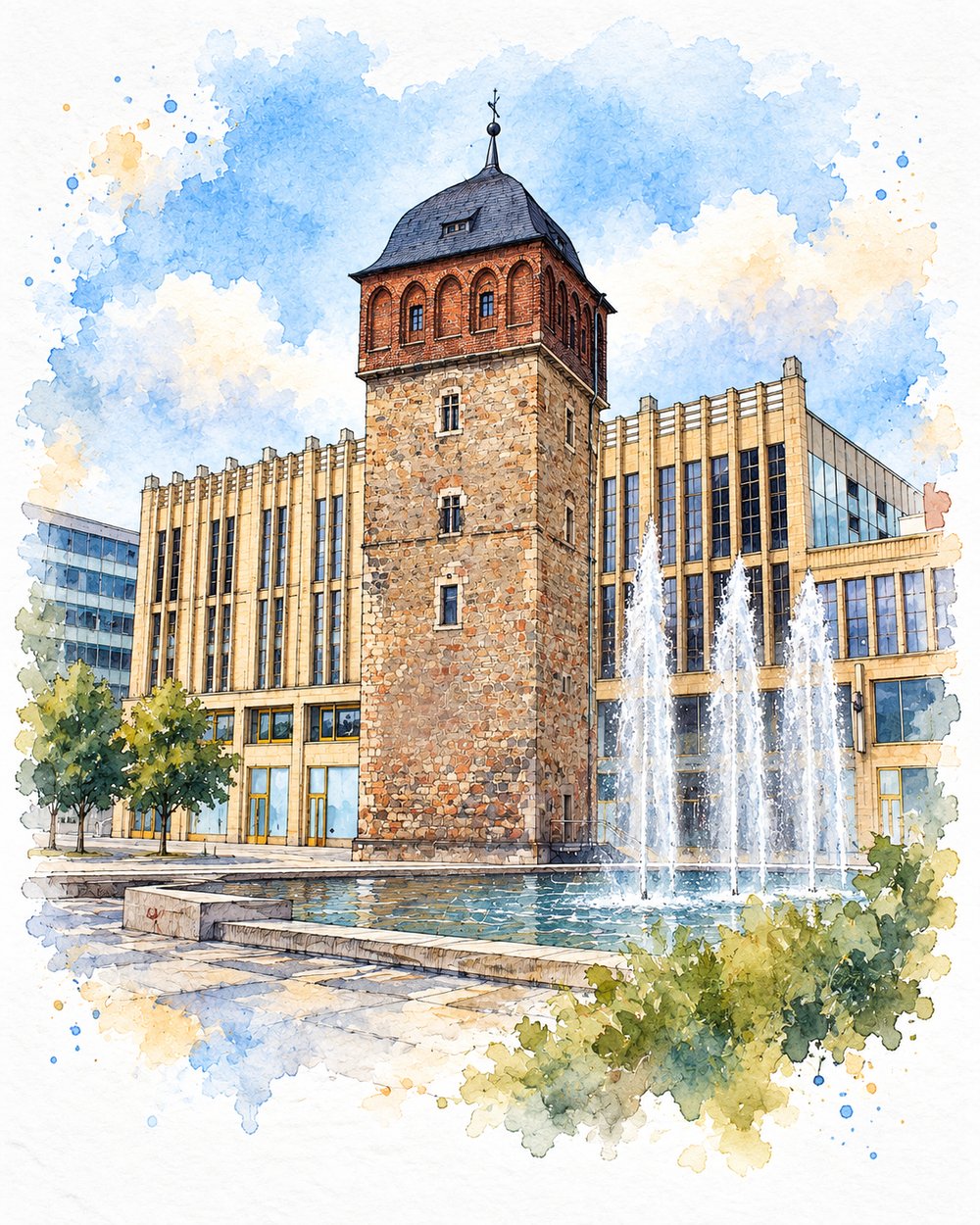
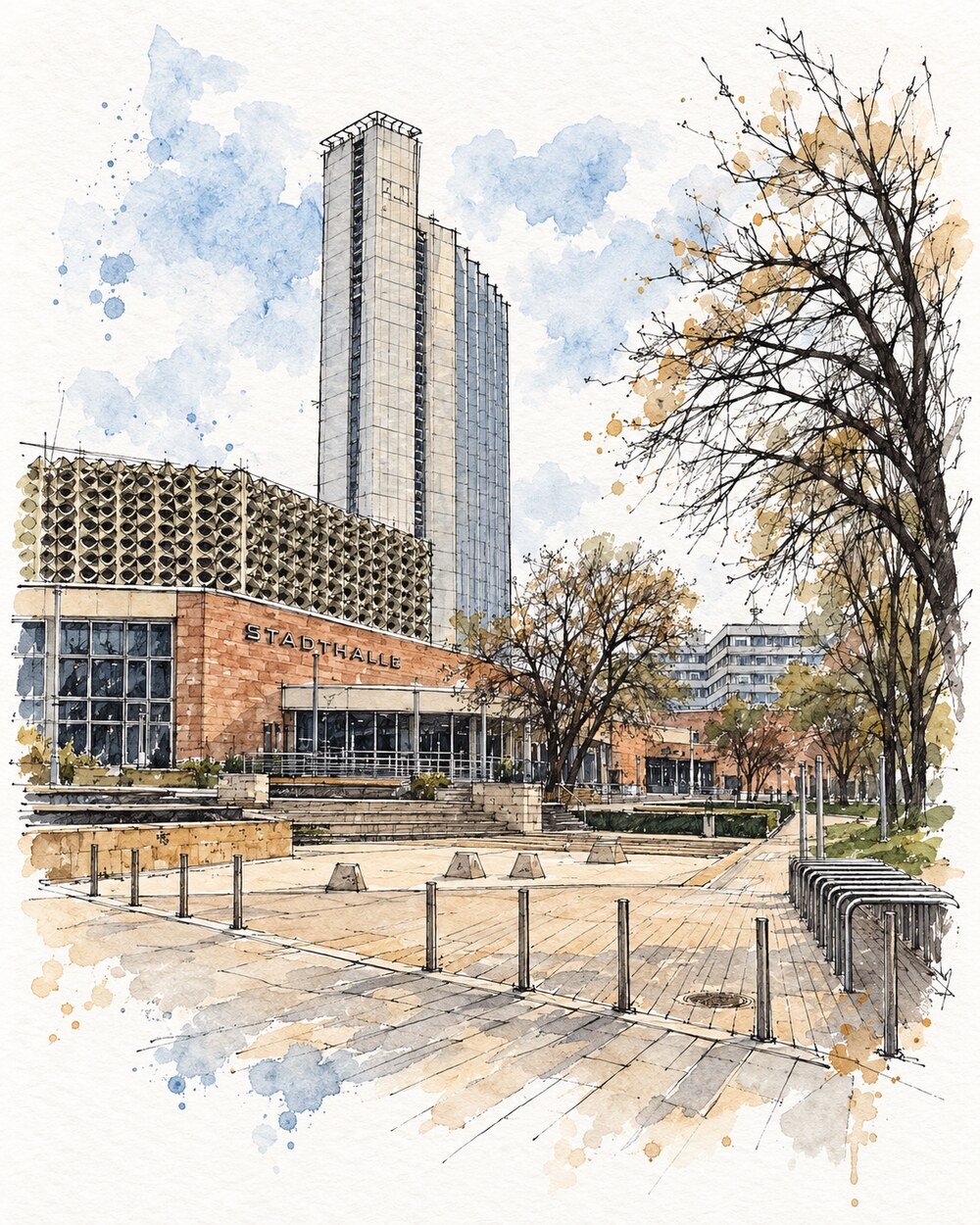
Galerie Roter Turm combines three levels of shopping, food and events. The Roter Turm is the oldest surviving building in the original city area. The Karl Marx Monument is a major landmark. Stadthalle Chemnitz is centrally located and has space for up to 3,034 people in its largest hall.
Das TIETZ and smac provide further cultural destinations. smac occupies a former department store; Das TIETZ is on Moritzstraße close to the centre. Other focal points include the main station, Johannisplatz and the new Johanniskarree. Car parks at Galerie Roter Turm and around the centre support access.
Retail, restaurants, hotels, culture, administration and services are close together. The city centre offers events, food, shopping and cinema, with the tourist information office at the market, hotels and venues within walking distance. Different activities bring audiences together during both the day and evening.

Capital of Culture, tourism, sport and leisure
Culture keeps moving
As European Capital of Culture 2025, Chemnitz attracted international attention. Museums, theatres, festivals and sporting events continue to shape the city. Messe Chemnitz, Stadthalle and the centre bring cultural audiences, business travellers and regional visitors together.
Trade fairs, Stadthalle and the city centre bring cultural audiences, business travellers and regional visitors together.
Detailed facts: culture, tourism, sport and leisure
The official account of the 2025 Capital of Culture year reports nearly 2,000 events and an estimated total of more than 2 million visitors, participants and guests. The opening celebration on 18 January 2025 attracted 80,000 people, and Hutfestival attracted 105,000.
Kunstsammlungen Chemnitz recorded 61,205 visits in the first five months of 2025, more than twice the previous year’s figure. The city reported 64,849 overnight stays in August 2025, while September overnight stays were 28.8% higher than in the same month a year earlier. Overnight stays in the Chemnitz-Zwickau tourism region rose by 9.5% in 2025. The Chemnitz Christmas market attracted well over 420,000 visitors towards the end of the year.
Messe Chemnitz has two halls, 11,000 m² of exhibition space and 8,000 m² of outdoor space. Depending on the format, Hall 1 accommodates up to 9,500 standing or 7,000 seated in rows. Stadthalle’s largest hall seats up to 3,034 people, while the Carlowitz-Saal accommodates up to 600.
Museumsnacht, Hutfestival, Mozartfest, Parksommer and other events bring audiences into the city throughout the year. Tourism and events add further visitor journeys to everyday local activity.
NINERS Chemnitz is an established top-division basketball club with strong regional support and media visibility. Chemnitzer FC, sports events around Messe Chemnitz and the stadium on Gellertstraße create further sporting and community contexts. The stadium is accessible from the main station, city centre and motorway network.
Advertising in Chemnitz is therefore part of both everyday movement and the emotional setting of sport and events.
The complete collection of guides
Discover Chemnitz. What interests you?
All 20 themed guides bring together images, short descriptions and practical information. Whether you are planning a city walk, a family outing or a day in the countryside, each guide offers ideas and links for further information.
A city walk, a family outing or a day in the countryside: explore Chemnitz and its surroundings according to your interests. Each illustrated card links to a themed guide with places to visit and practical information.
City and culture
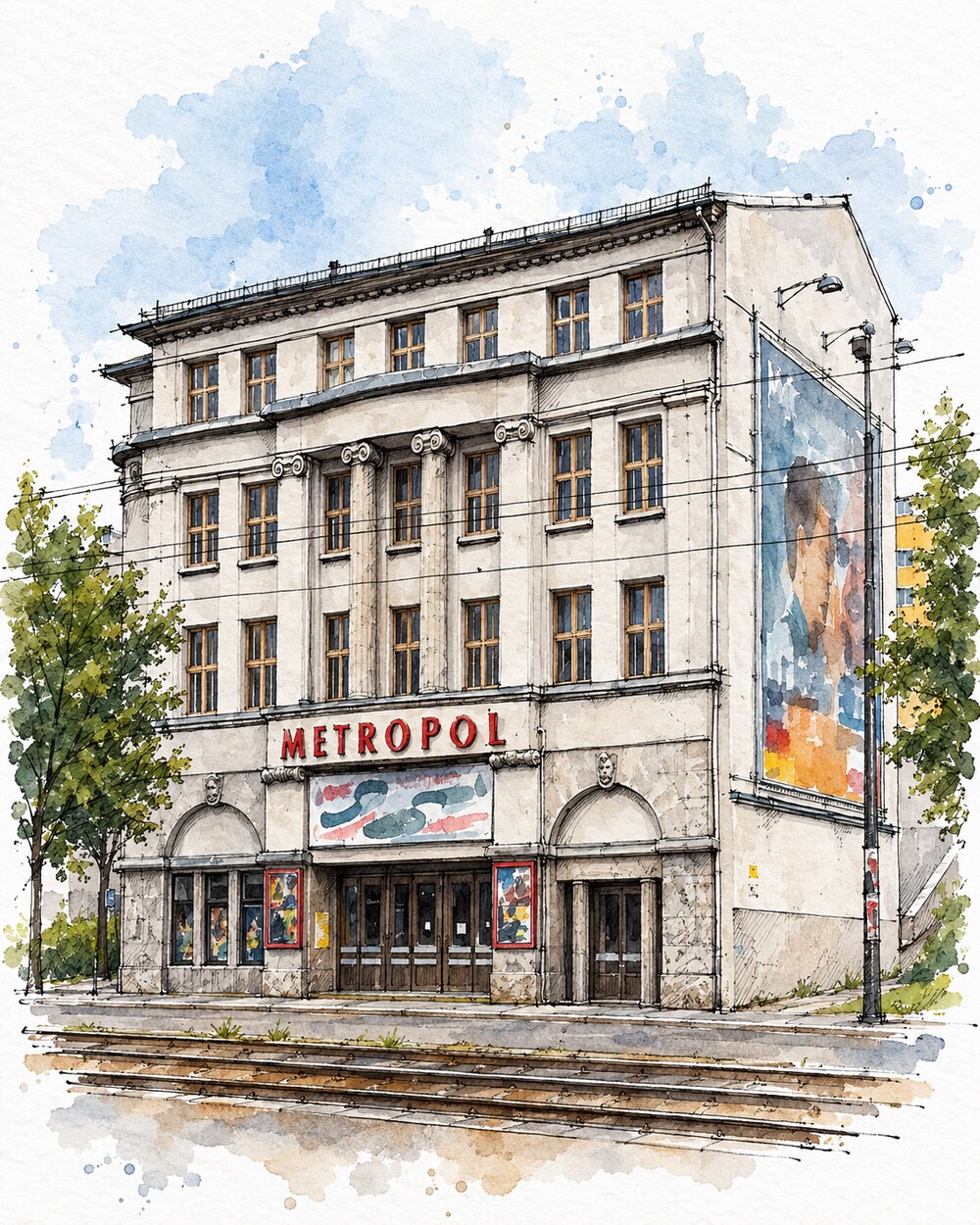
Sights and attractions
Distinctive buildings, museums and green retreats for a first visit or a return trip.
Explore the guide →Day trips and nature
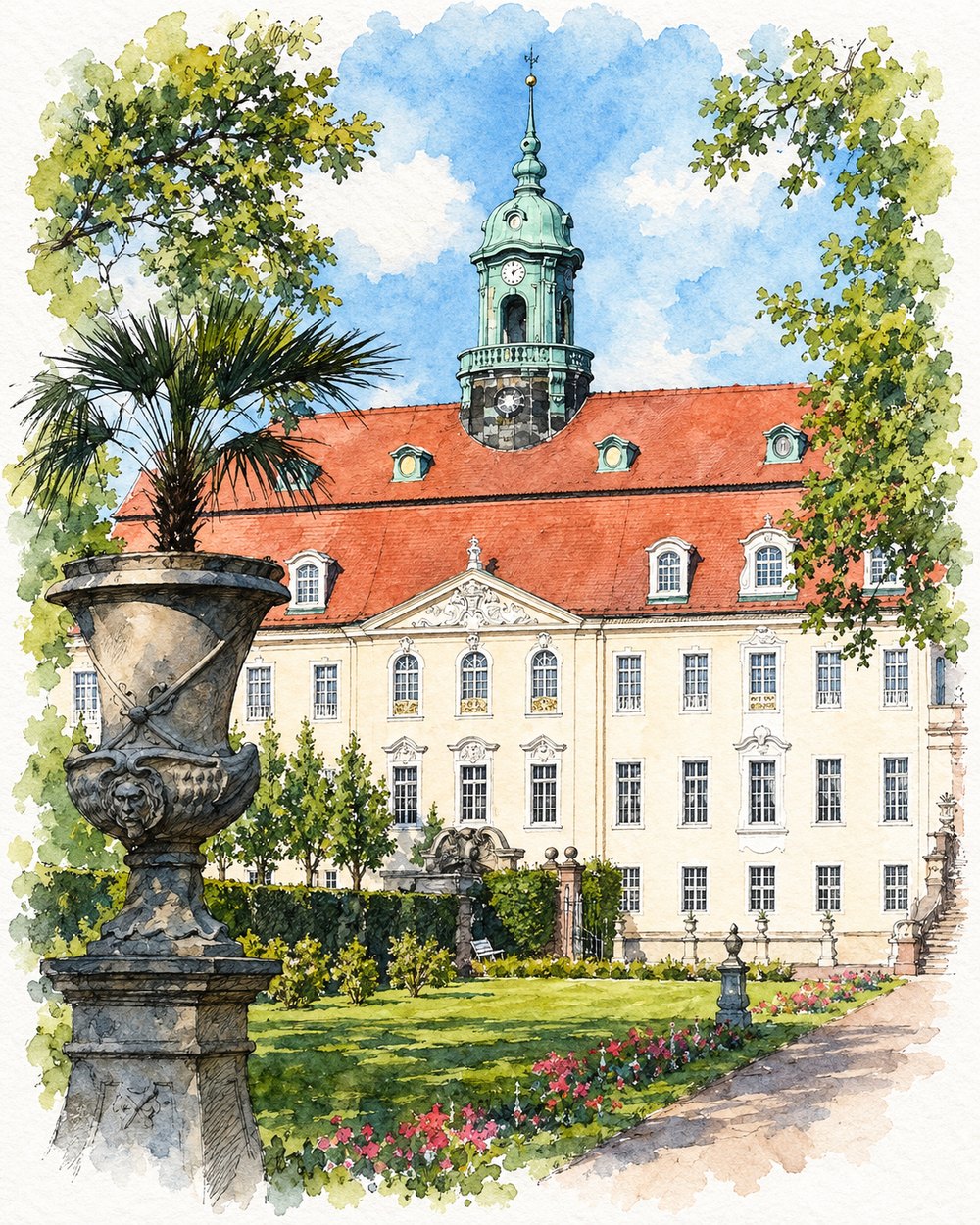
Chemnitz landmarks
The Nischl, Roter Turm and other distinctive places tell the city’s story.
Explore the guide →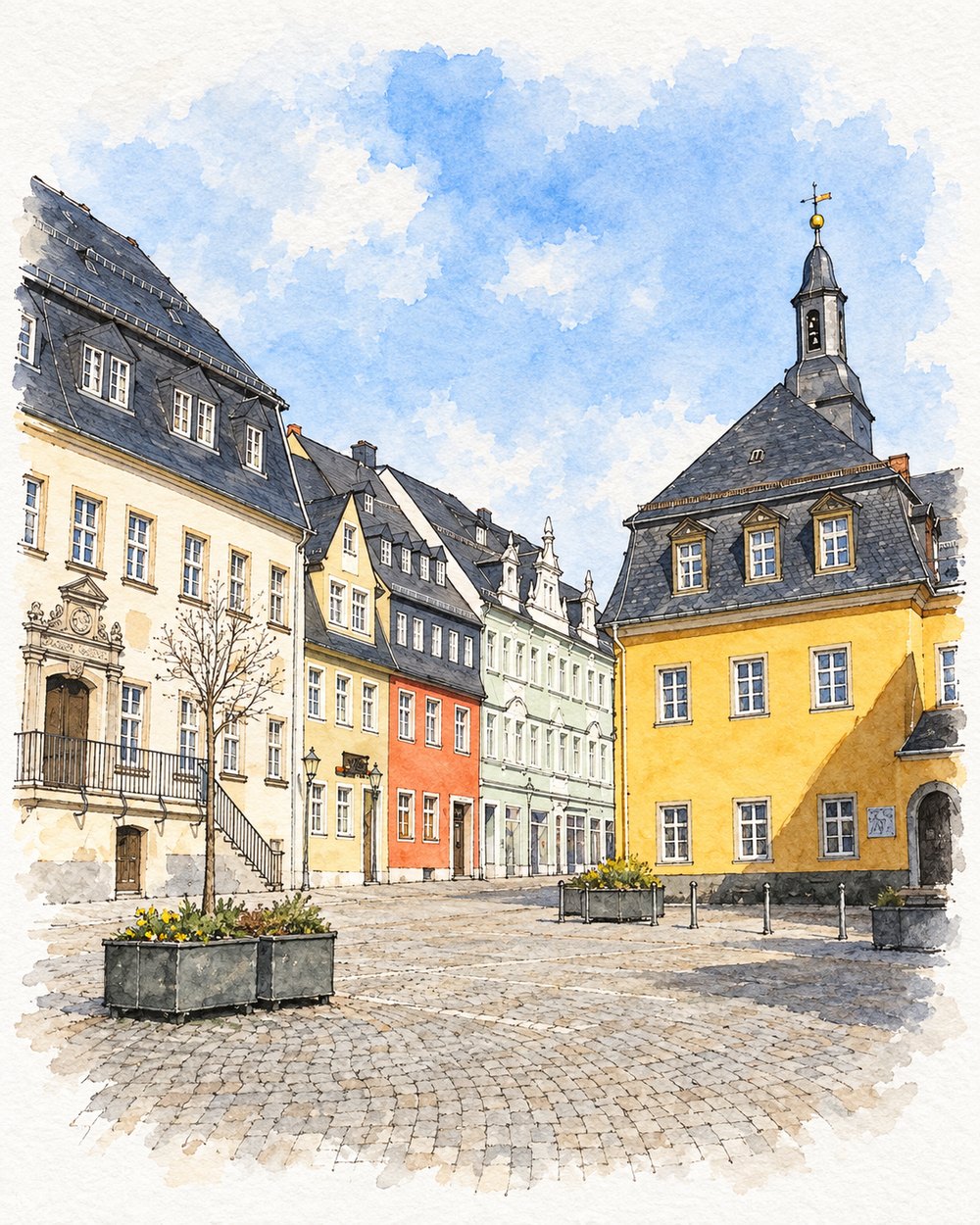
Discover the museums
Archaeology, art, industry and natural history in ten Chemnitz museums.
Explore the guide →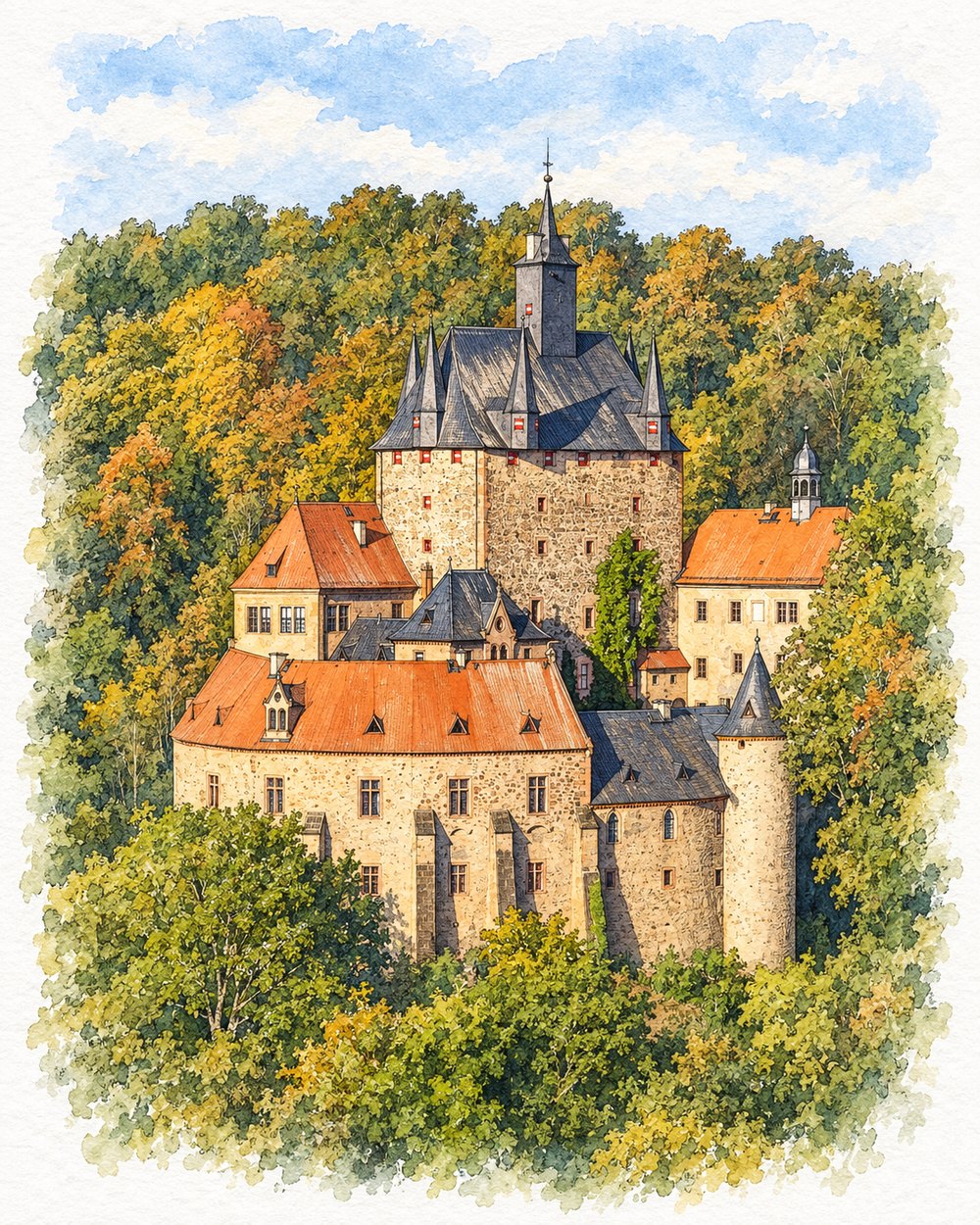
Theatres and cultural venues
Major stages, concert halls and independent spaces show the variety of local cultural life.
Explore the guide →
Cinemas and film theatres
Ten ideas for a film night, from major cinemas to smaller film venues.
Explore the guide →Family and leisure
Day trips around Chemnitz
Castles, palace gardens, rocky landscapes and family attractions for a day out.
Explore the guide →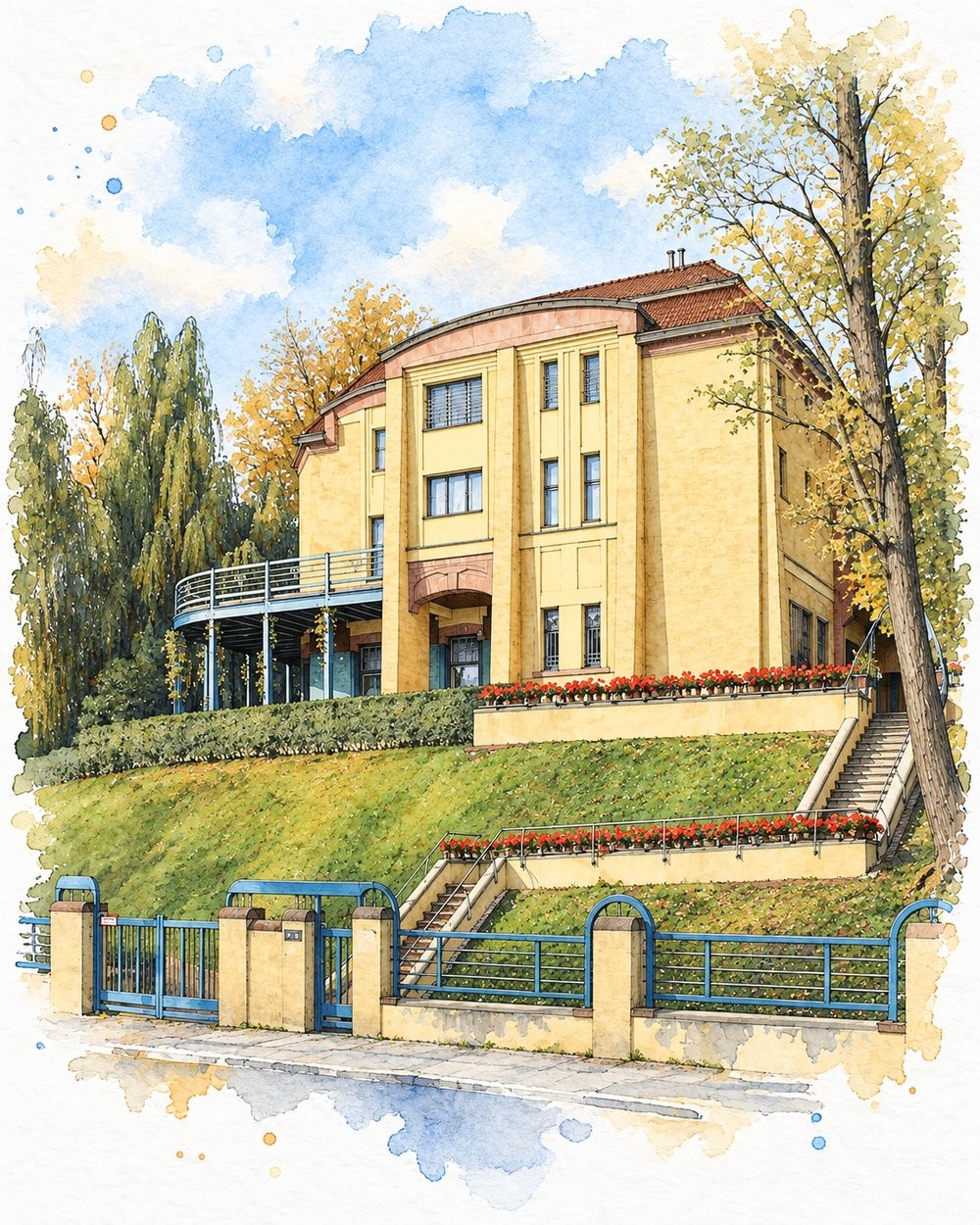
Beautiful places in the surrounding area
Historic lanes, market squares and palace gardens in neighbouring regions.
Explore the guide →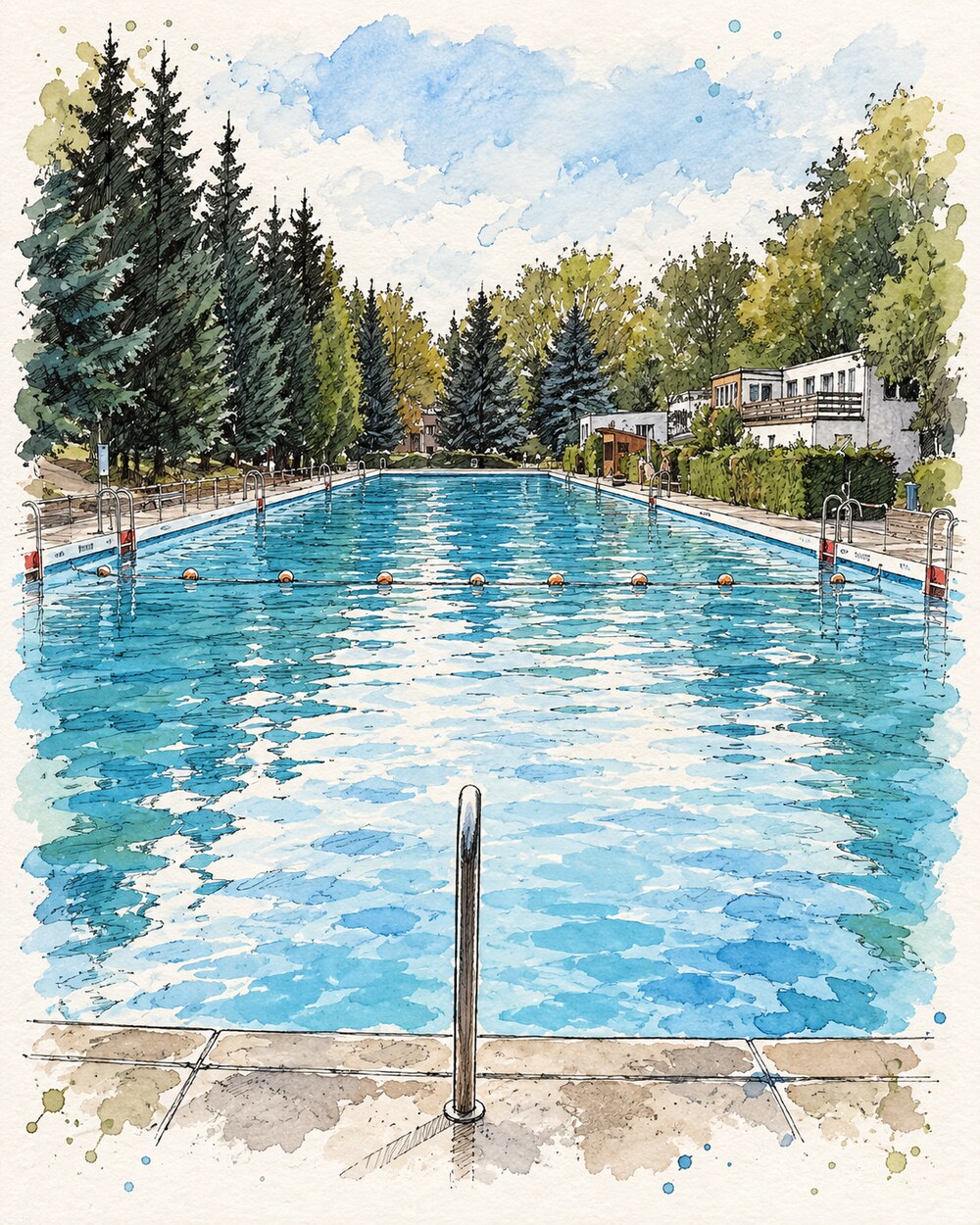
Castles and palaces
Ten historic places to explore, from grand interiors to towers and parks.
Explore the guide →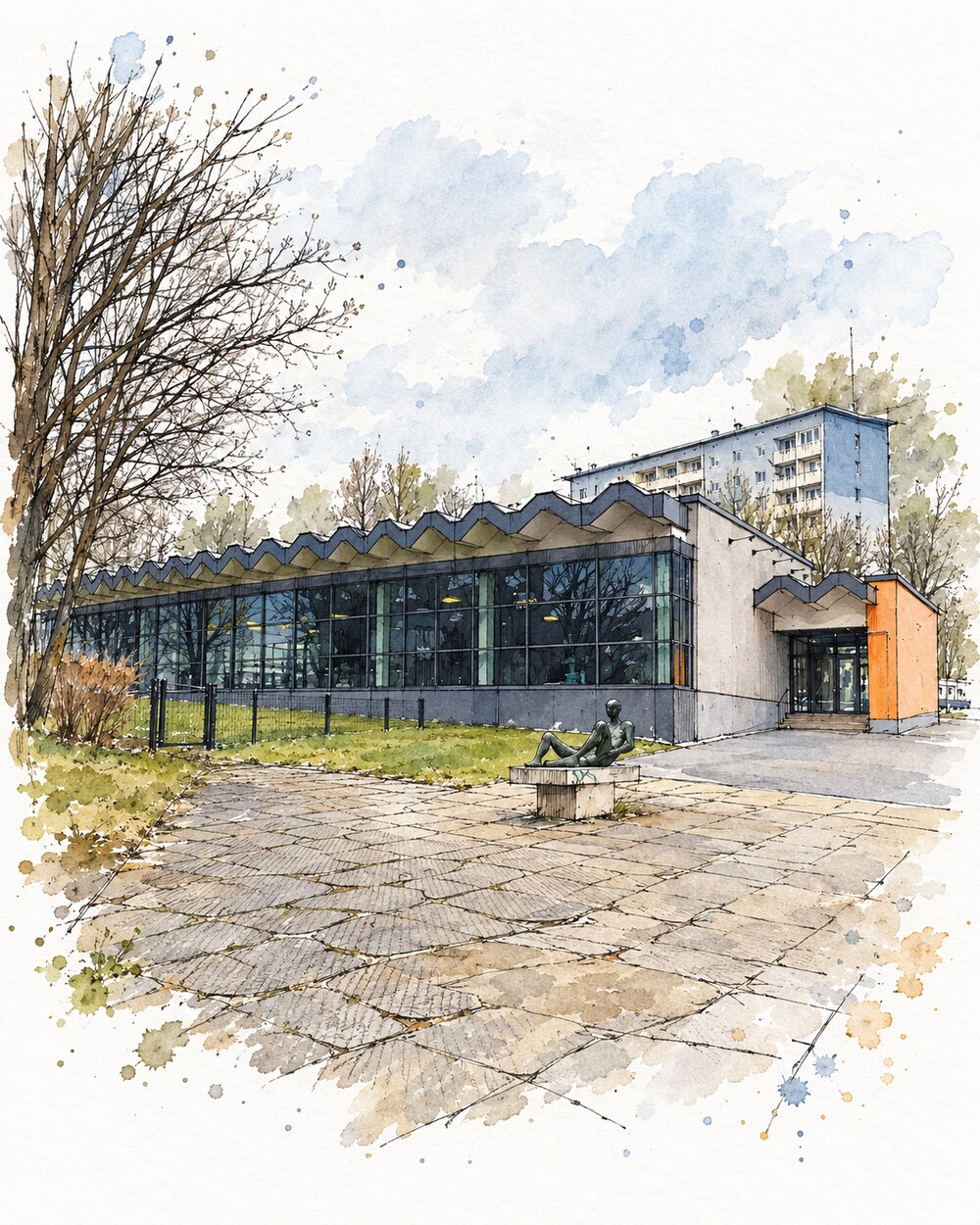
Walking routes and nature
Ten walks through woodland, river valleys and rocky landscapes, with route links.
Explore the guide →
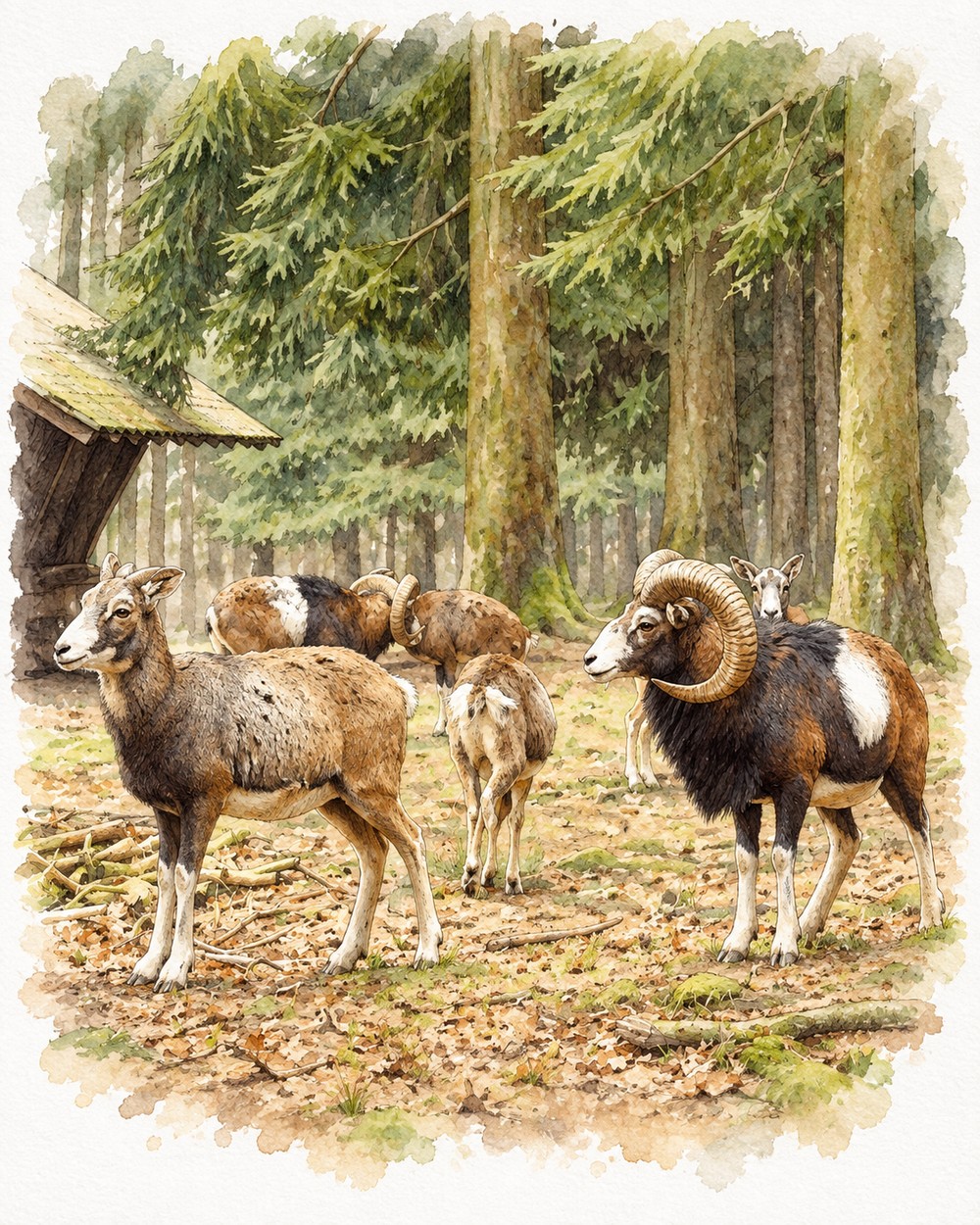
Days out with children
Animals, miniature railways and shared experiences in Chemnitz and the surrounding area.
Explore the guide →Food and accommodation
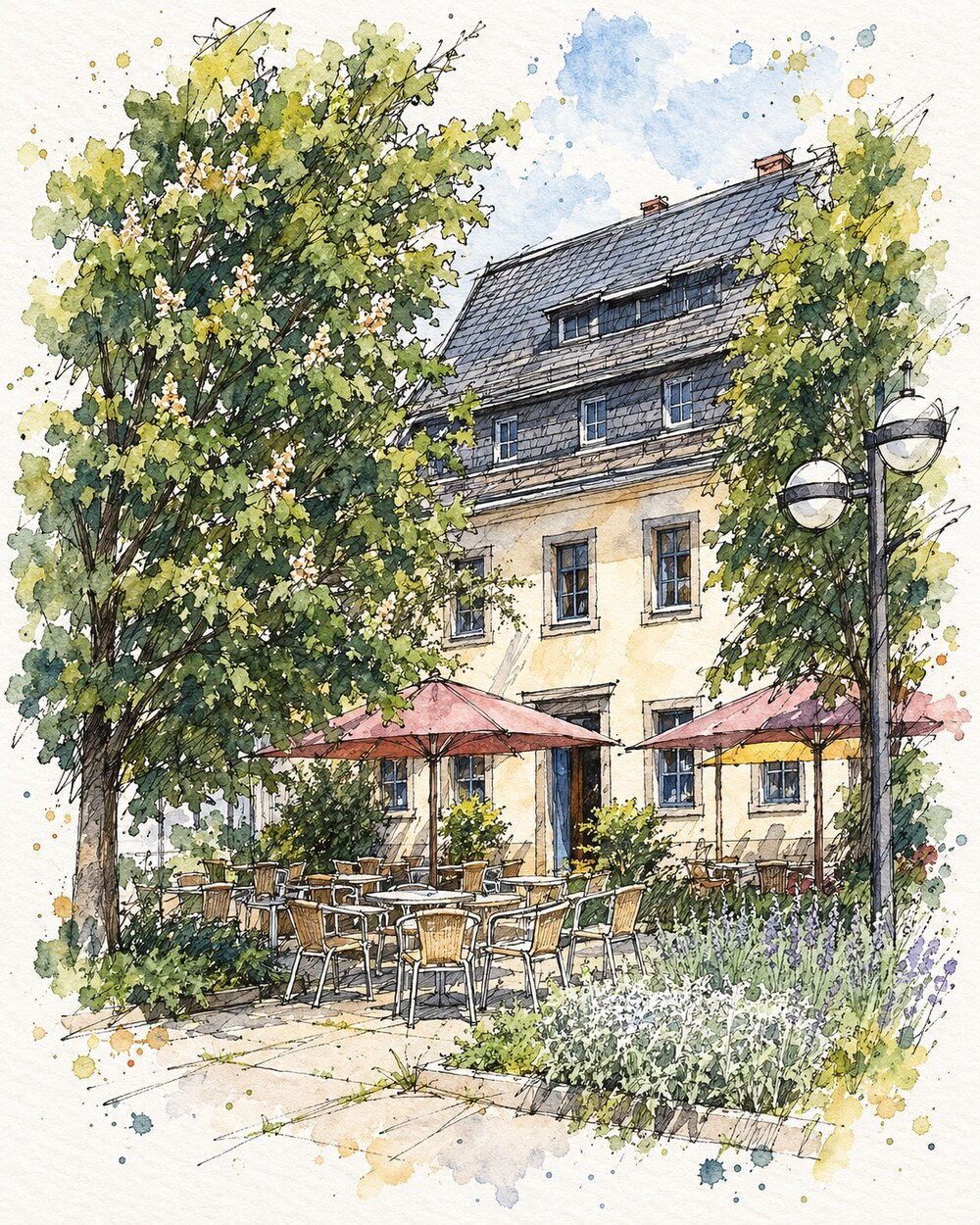
Rainy-day outings
Museums, historic vehicles and indoor experiences for wet-weather days.
Explore the guide →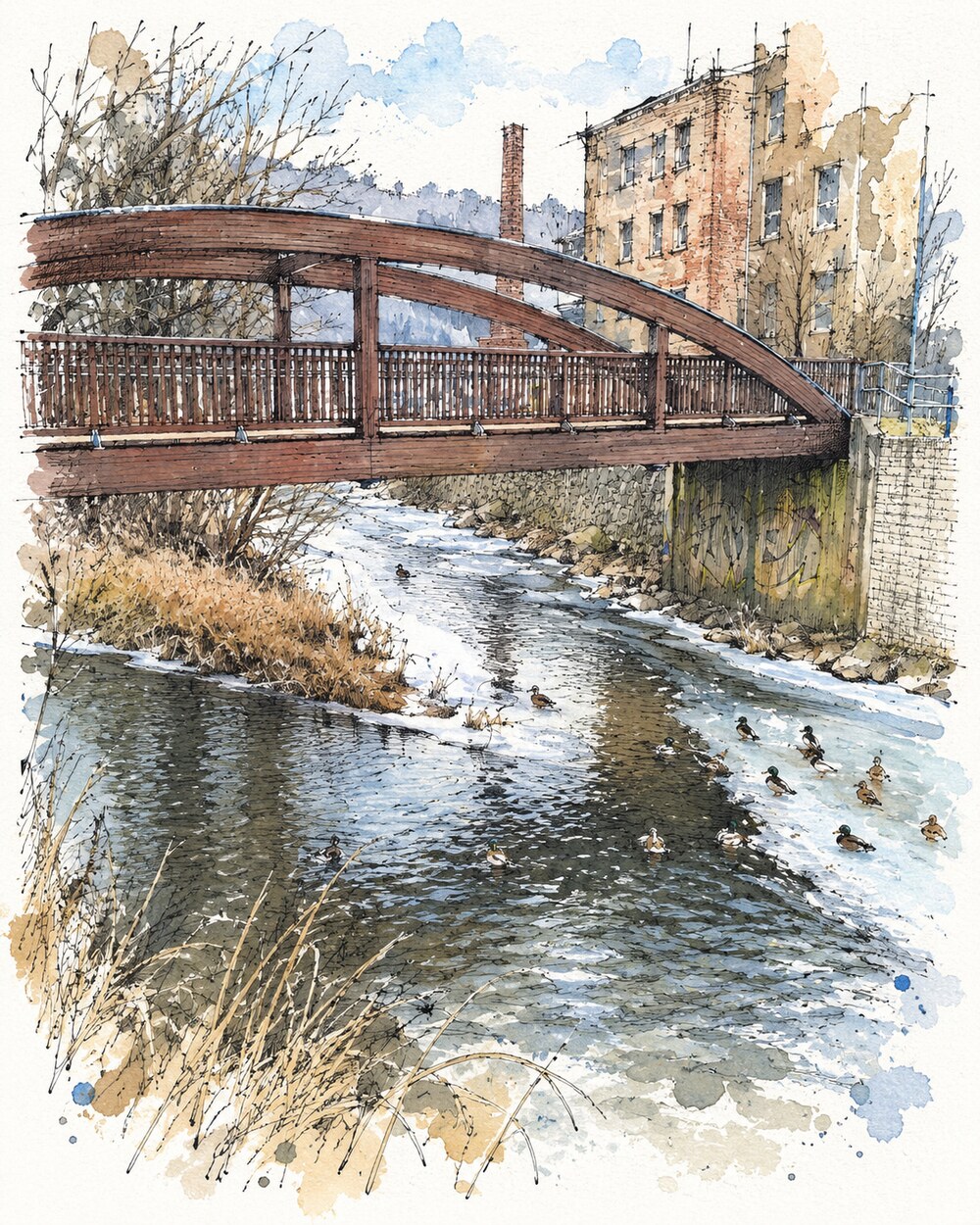
Outdoor pools and swimming lakes
Summer destinations by the water, including outdoor pools and natural bathing spots.
Explore the guide →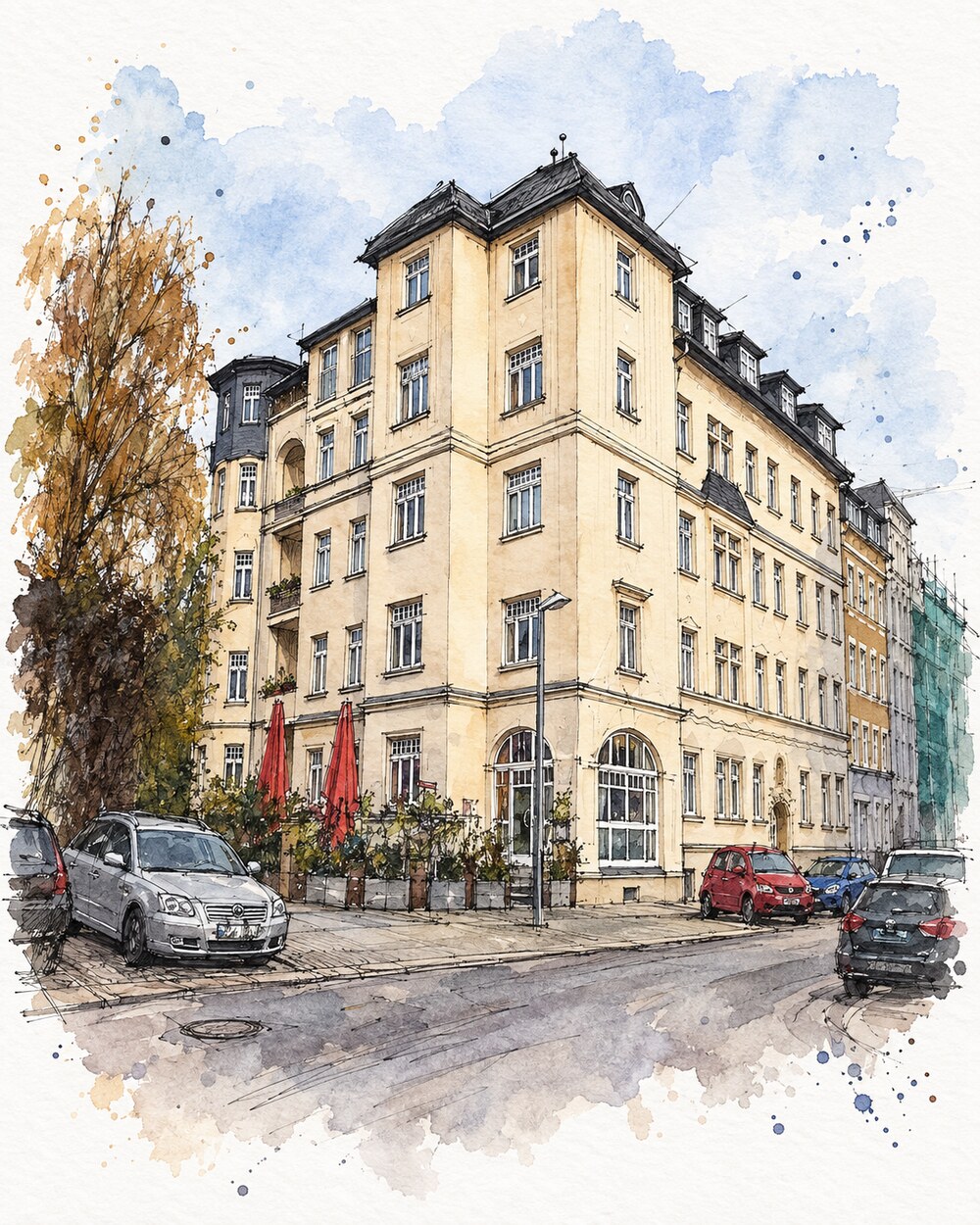
Indoor pools and wellness
Sport, family time and relaxation at ten pools in the region.
Explore the guide →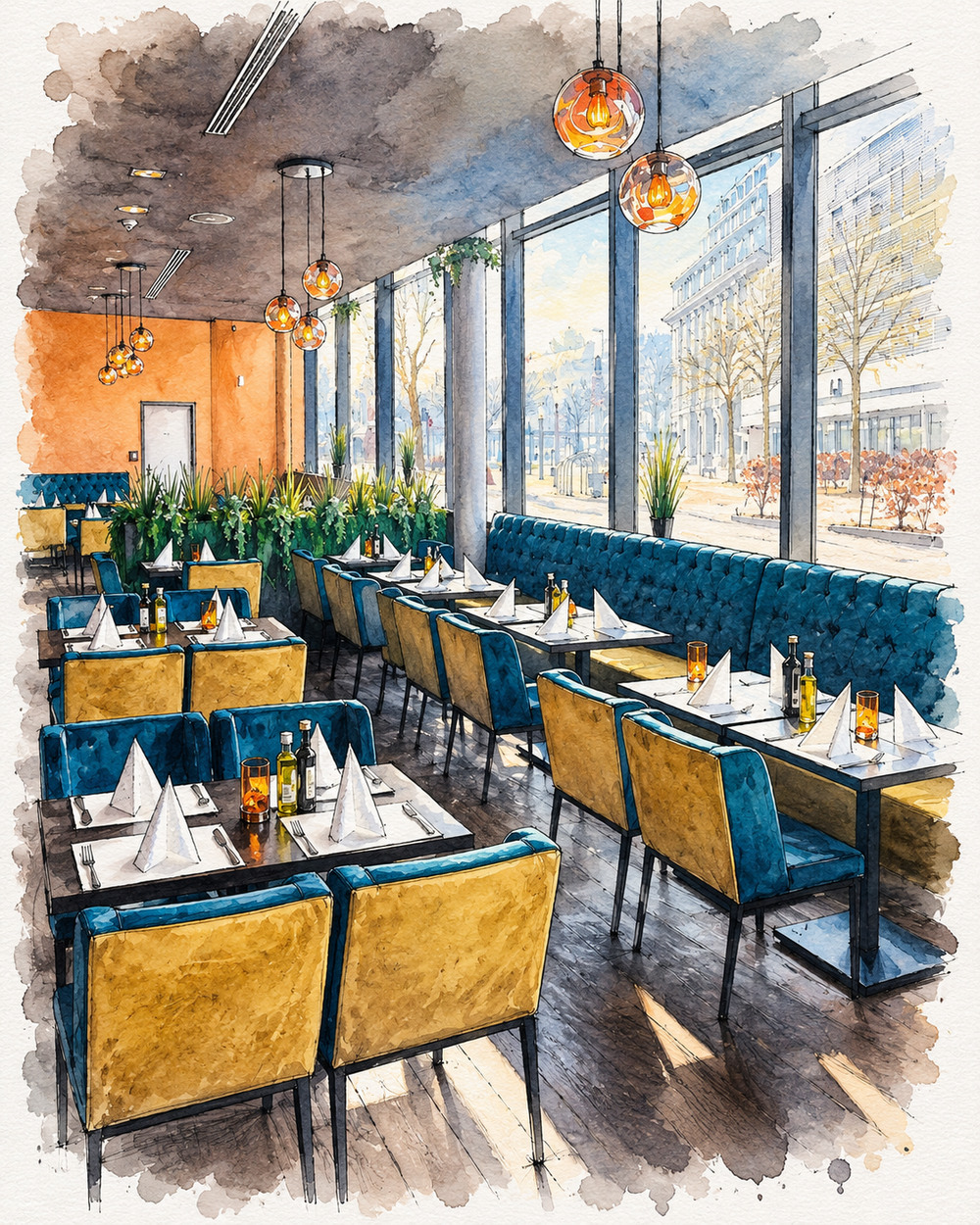
Christmas markets
Advent atmosphere, Christmas pyramids and Ore Mountain woodcraft in Chemnitz and beyond.
Explore the guide →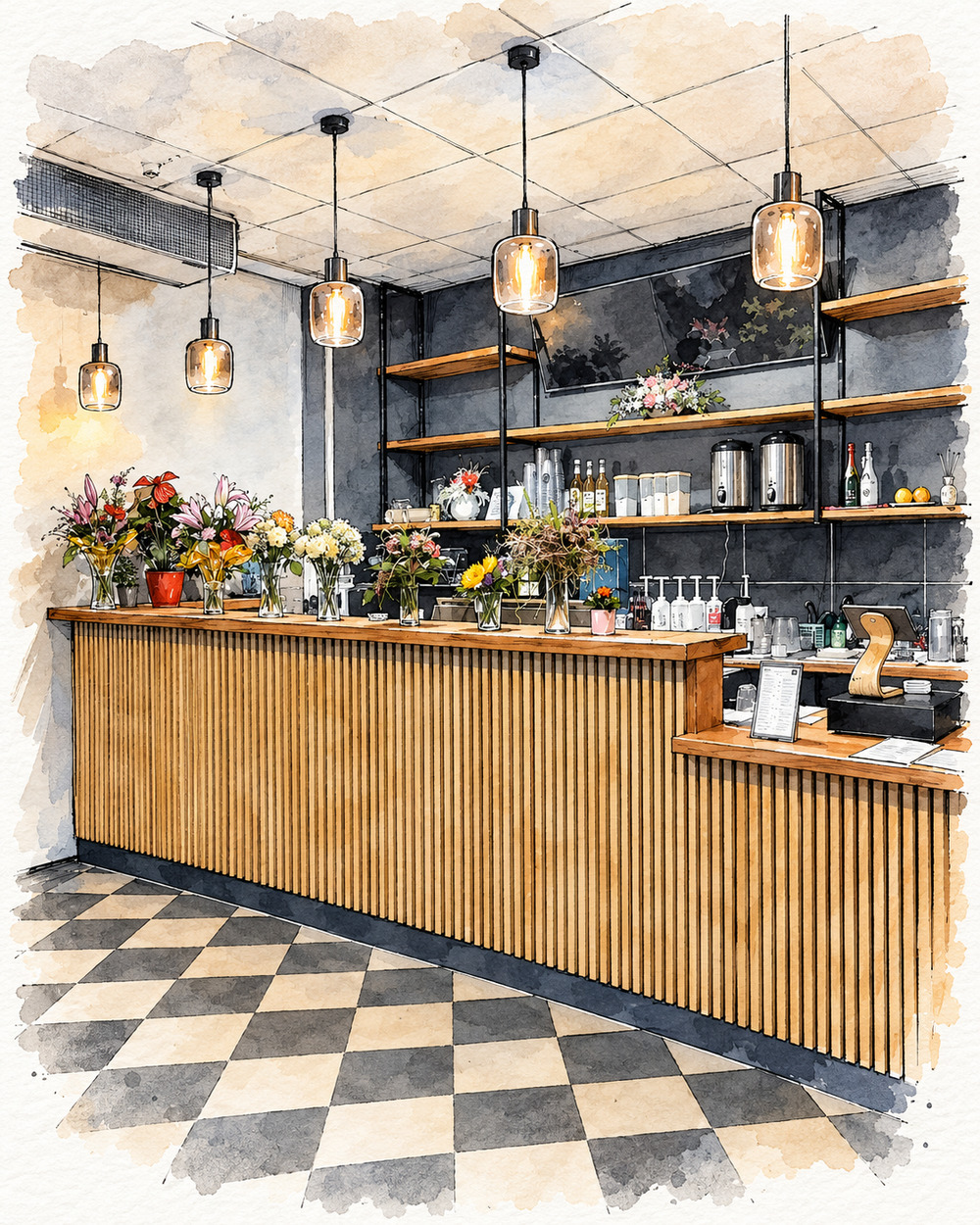
Restaurant recommendations
Ten restaurants with individual cooking styles and distinctive settings.
Explore the guide →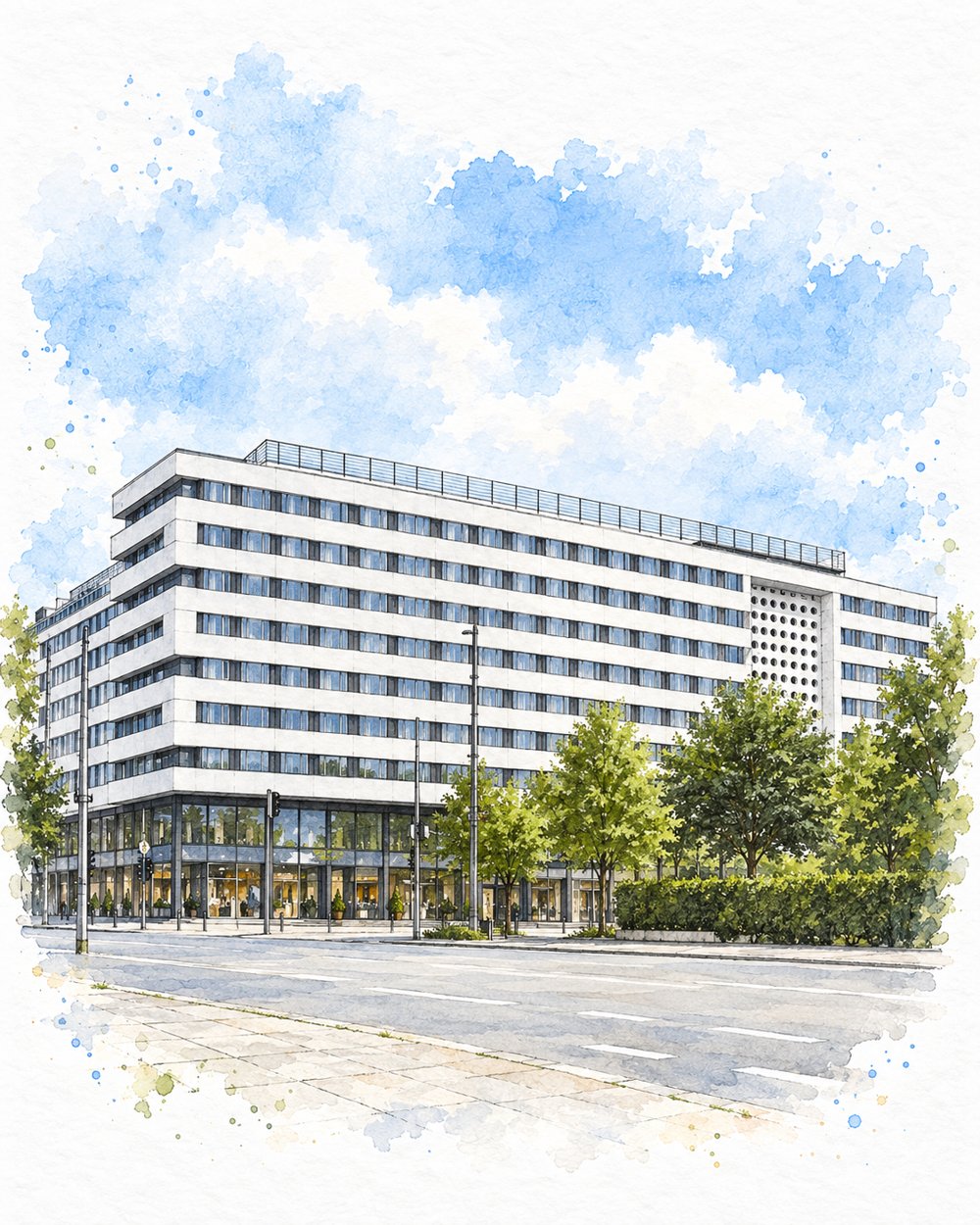
International restaurants
A culinary journey through different countries and food traditions in Chemnitz.
Explore the guide →Illustrations and image credits
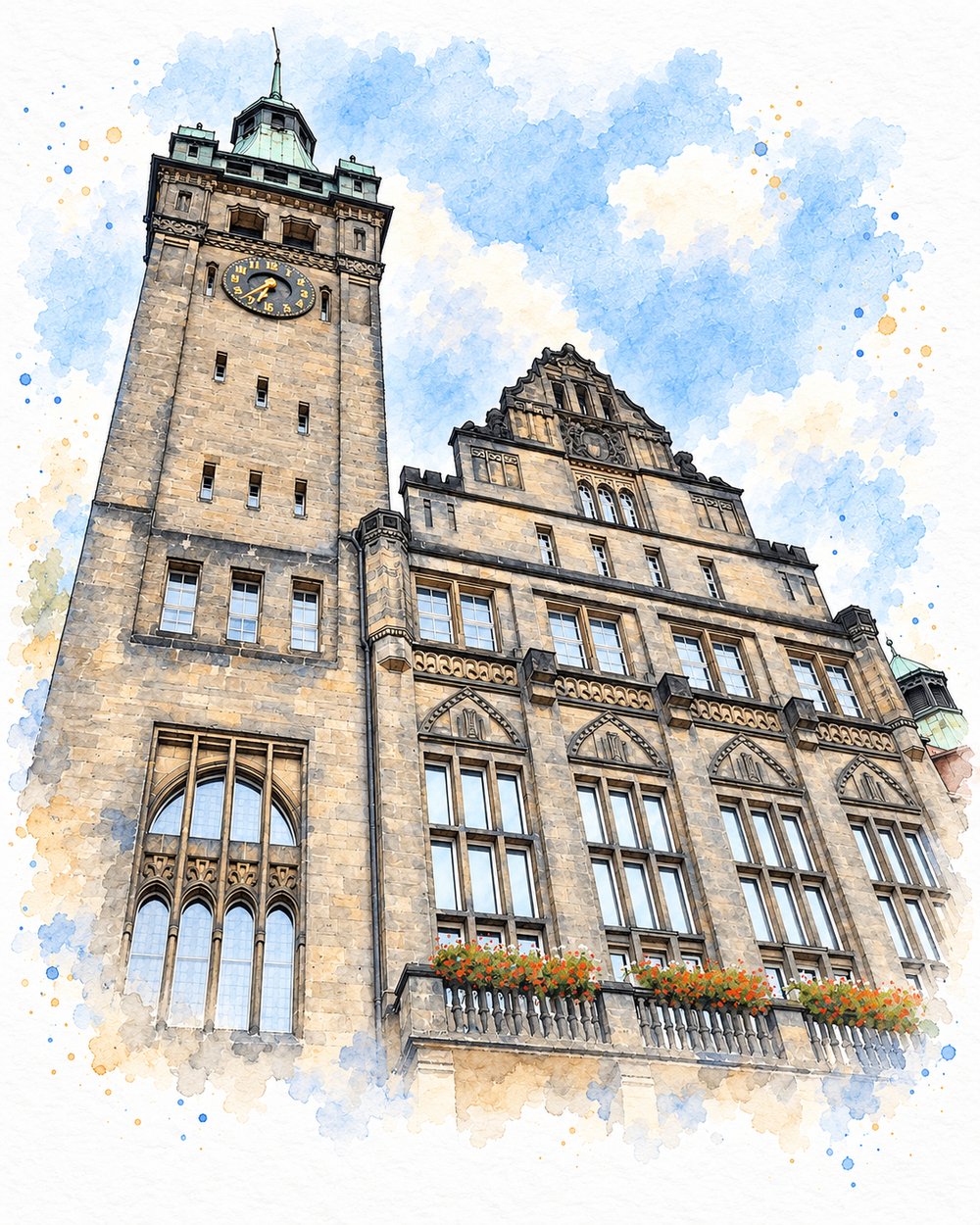
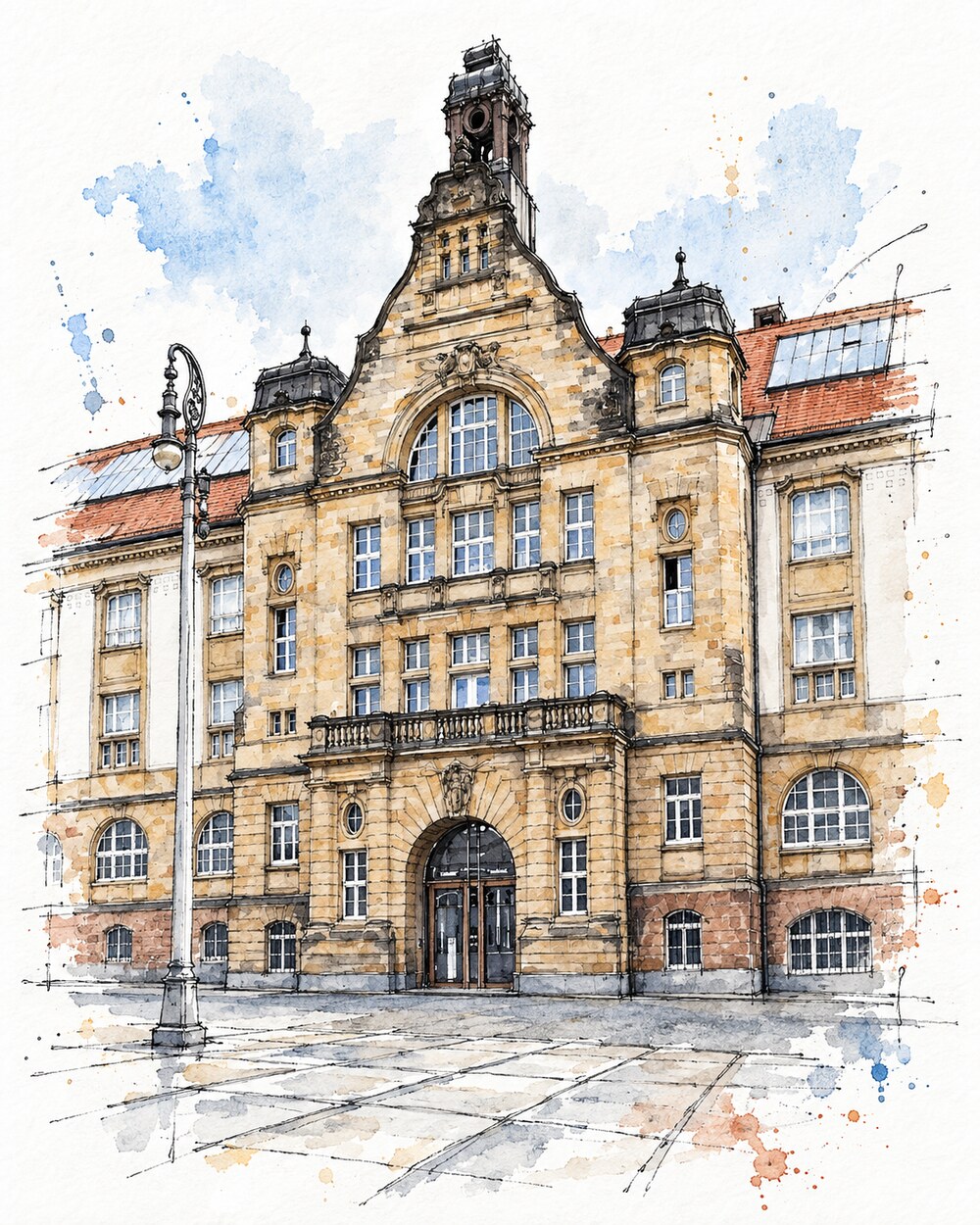
Ink-and-watercolour illustrations from the linked CPW guides, created with AI assistance. Edited by CPW and displayed as cropped preview images. Reference photographs, authors and licences are credited in the individual guides and below.
- Asian restaurants — CPW
- Restaurant recommendations — Illustration based on “Schönherrstraße 08.JPG” by (dwt). · Reference photograph · CC BY-SA 3.0
- Outdoor pools and swimming lakes — CPW illustration based on “2020-12-31-Chemnitz-Freibad-Gablenz-1.jpg” by Kleeblatt187; adapted · Reference photograph · CC BY-SA 4.0
- Days out with children — “Tierpark Chemnitz 10.jpg” by Giorno2 · Reference photograph · CC BY 4.0
- Indoor pools and wellness — CPW illustration based on “Stadtbad Chemnitz.jpg” by Morris Jobke; adapted · Reference photograph · CC BY-SA 4.0
- International restaurants — Illustration based on a photograph by Derbrauni · Reference photograph · CC BY 4.0
- Italian restaurants — Ristorante Al Castello; photograph of the actual building by Aagnverglaser · Reference photograph · CC BY 4.0
- Cinemas and film theatres — Based on “Chemnitz CineStar.jpg” by Andreas Praefcke · Reference photograph · CC BY 3.0
- Discover the museums — Artistic reinterpretation of “Kaufhaus Schocken (Chemnitz) 01.jpg” by Derbrauni · Reference photograph · CC BY 4.0
- Christmas markets — “Chemnitz, Weihnachtsmarkt, Pyramide.jpg” by Dguendel · Reference photograph · CC BY 3.0
- Castles and palaces — “Schloss Augustusburg Südseite.jpg” by Harke · Reference photograph · CC BY-SA 3.0
- Day trips around Chemnitz — “Schloss Augustusburg Südseite.jpg” by Harke · Reference photograph · CC BY-SA 3.0
- Theatres and cultural venues — CPW illustration based on “Opernhaus Chemnitz (2).jpg” by Aagnverglaser; adapted · Reference photograph · CC BY-SA 3.0 DE
- Greek restaurants — CPW
- Hotels in Chemnitz — Chemnitzer Hof, photograph by Andreas Praefcke · Reference photograph · CC BY 3.0
- Rainy-day outings — smac, “Kaufhaus Schocken (Chemnitz) 01.jpg” by Derbrauni · Reference photograph · CC BY 4.0
- Beautiful places in the surrounding area — “AugustusburgMarkt.JPG” by Jwaller · Reference photograph · CC BY-SA 3.0
- Sights and attractions — Karl Marx Monument; photograph by Velvet · Reference photograph · CC BY-SA 4.0
- Chemnitz landmarks — Karl Marx Monument; photograph by Velvet · Reference photograph · CC BY-SA 4.0
- Walking routes and nature — “Burg Rabenstein (Chemnitz) 08.jpg” by Derbrauni · Reference photograph · CC BY 4.0


Chemnitz as an advertising location
The city brings together several sources of audience activity: a population of around a quarter of a million, more than 52,000 inbound commuters, retail spending attracted from the surrounding area, cultural and tourism visits, and around 80,000 daily transfers or arrivals at the central transport interchange. These are different measures of activity, not figures to add together as unique advertising reach.
Routes between the main station, central interchange, Neumarkt, Galerie Roter Turm, Moritzstraße, Theaterplatz, Stadthalle and Johannisplatz connect work, shopping, public services, study, culture and leisure. A campaign can be encountered repeatedly in real everyday settings.
Chemnitz combines the roles of regional centre, industrial and research location, shopping city, cultural destination and transport hub. This makes it relevant for local campaigns, regional brands, retail communications, recruitment, events and corporate image advertising.
Sources and reference dates
Revised on 1 October 2026. Highlighted population figures refer to 30 June 2026; university figures refer to 2025. Other historical indicators are identified in the relevant sections.
- City of Chemnitz: population development to June 2026, report of 3 July 2026
- TU Chemnitz: facts and figures 2025
Principal sources: City of Chemnitz population report of 3 July 2026 and TU Chemnitz facts and figures for 2025. Further sources include the Statistical Office of Saxony, IHK Chemnitz, Chemnitz employment agency, TU Chemnitz, Fraunhofer IWU, Fraunhofer ENAS, Chemnitz 2025, CVAG, C³ Chemnitz and Chemnitz.Travel.
AI-assisted illustrations